
Set Up Injury-Proof Shelving in Your Storage Unit to Access Items Easily
In self-storage, put frequent-access items in the middle reach band, not near the floor or ceiling. Then compare ratings, materials, unit size and aisle space.
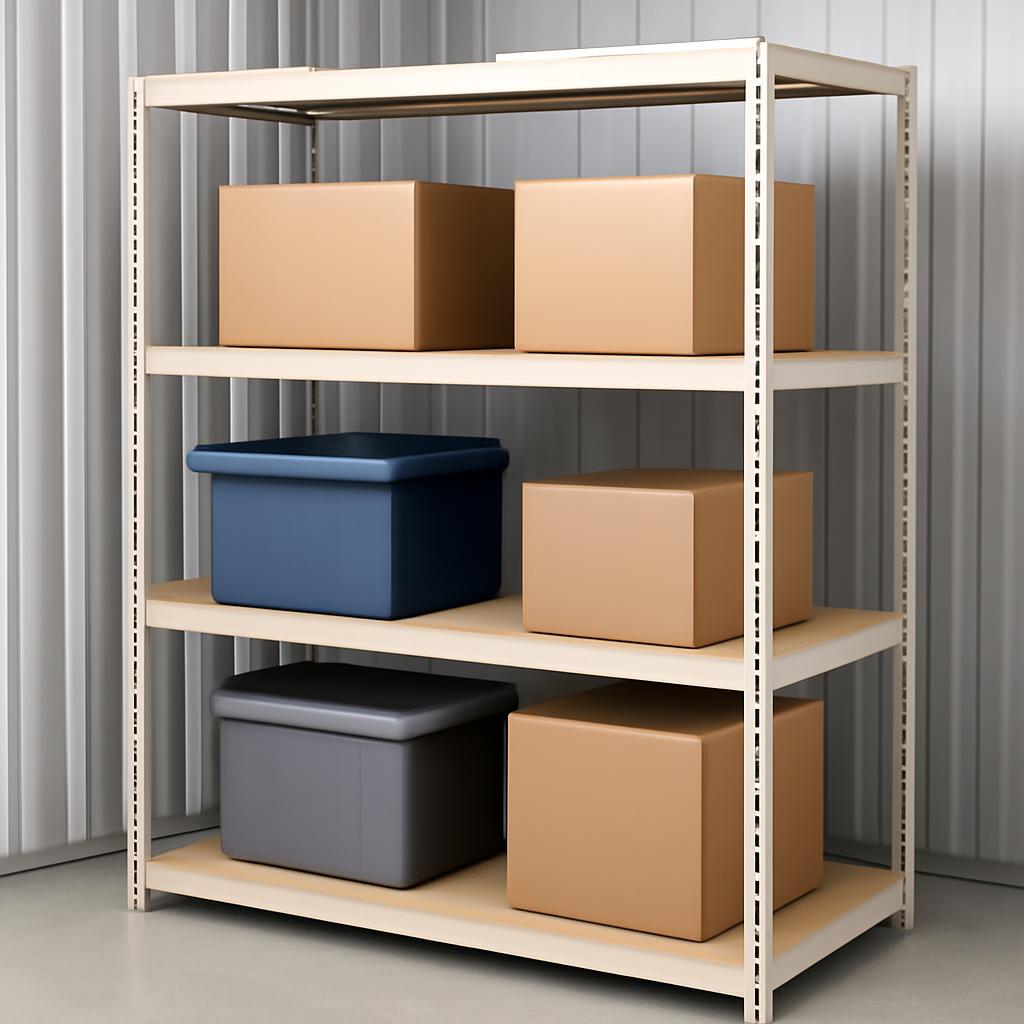
No shelving setup can guarantee zero injuries or zero damage. But ergonomic shelving can make a self-storage unit much easier to use by reducing deep bending, awkward reaching, unstable floor stacks, and blocked walk paths. That matters because a storage unit is not just a box to fill. It is a retrieval system you will likely revisit over weeks or months, sometimes in a hurry and often while moving heavy or awkward items. Guidance from Eureka Ergonomic on vertical storage, together with Orange Box Self Storage’s storage-unit organization advice, supports the same practical idea: lifting items off the floor, keeping an aisle open, and placing common-use items in easier reach can make access simpler and less frustrating. Eureka Ergonomic, Orange Box Self Storage
For renters, the basic framework is straightforward. Put the heaviest items low, the items you expect to retrieve most often in the middle reach zone, and the lightest, least-used items high. Then choose a shelving material and layout that fit the unit’s size, your access needs, and the shelf’s actual rating. This is best treated as practical renter guidance adapted from storage and shelving sources, not as a universal engineering standard for every shelf or every user. The shelf maker’s instructions and weight limits always come first. Orange Box Self Storage, Storage & Ergonomic Equipment
Why Ergonomics Improves Self-Storage Access and Packing
Ergonomic shelving helps because it changes how you interact with the unit, not just how much volume you can claim on paper. When boxes sit directly on the floor in piles, every retrieval starts with crouching, kneeling, or moving other items first. Vertical shelving lifts more belongings into view, clears floor space for a usable aisle, and makes it easier to separate “store for months” from “grab next week.” That broad benefit is consistent across Eureka Ergonomic’s vertical-storage advice and Orange Box Self Storage’s guidance on using unit height instead of building random floor towers. Eureka Ergonomic
The biggest day-to-day gain usually comes from putting frequent-access items in a middle reach band instead of on the floor or near the ceiling. Eureka frames this as keeping items in an easier reach zone; Orange Box applies the same logic in a storage-unit context by recommending a mid-level zone for commonly used belongings. In practice, that means tax files you may need, seasonal bins you rotate, cleaning kits, dorm supplies, or spare kitchen goods usually belong between low crouching height and high overhead height rather than at either extreme.
Ergonomic shelving also improves packing density in a more honest way than simple “stack it higher” advice. A 5×10 or 10×10 unit may have plenty of cubic footage, but floor piles waste that volume because they become inaccessible or unstable long before the ceiling is reached. LockerHelp’s sizing guide notes that common unit ceilings often run about 7.5 to 10 feet, which is exactly why shelving can help translate vertical height into organized storage instead of hard-to-reach heaps. (LockerHelp, Storage Unit Sizes: What Actually Fits in a 5x5, 5x10, and 10x10.)
Just as important, shelving only helps if it is loaded logically. Orange Box warns against poor stacking and overloaded boxes, while Storage & Ergonomic Equipment emphasizes checking capacity labels, loading heavier items low, and watching overall stability. So “ergonomic shelving” in self-storage does not mean buying any tall rack and filling it to the top. It means turning the unit into a system that stays visible, reachable, and stable under real use. Orange Box Self Storage, Storage & Ergonomic Equipment
Shelf Height Zones: Floor, Mid, and Top Levels for Safe Reach
For self-storage, the most useful way to think about shelf height is by zones, not by one supposedly perfect universal measurement. The exact best height depends on your size, what you are storing, shelf depth, and how often you visit the unit. In renter use, the clearer approach is to assign shelf bands by weight, use frequency, and lifting difficulty.
A workable layout looks like this:
- Floor level: roughly 0 to 3 feet. Reserve this area for the heaviest items and the most crush-resistant containers.
- Mid level: roughly 3 to 6 feet. Use this for frequent-access items and anything you want to grab without deep bending or overhead lifting.
- Top level: above about 6 feet. Keep this for lightweight, low-priority, or seasonal items only.
- Ceiling clearance: leave about 6 to 12 inches. That makes the top layer easier to see and avoids jamming bins tightly against the ceiling.
Those specific weight suggestions often quoted online—such as Orange Box’s planning numbers of up to 300 pounds per linear foot in the lower band, about 200 pounds per shelf in the middle band, and about 100 pounds per shelf on top—should be read as one facility’s practical rules of thumb, not as universal standards. They are useful for thinking about relative loading, but they do not override the actual product rating on your shelf, how evenly the load is distributed, or whether the unit is freestanding and stable.
For most renters, the decision order should be:
- Follow the manufacturer’s shelf rating and assembly instructions first.
- Consider how the load sits on the shelf—evenly spread or concentrated in one spot.
- Check total unit stability, especially with tall freestanding shelves.
- Use general zone rules only as planning heuristics after the first three checks.
That framework matters because a shelf advertised for garage or storage use can vary widely in strength. Even among tested consumer units, Car and Driver found major differences between lighter plastic, wire, and heavy metal shelving. The lesson is not that one format is always best; it is that you should not build a plan around generic internet numbers when the actual shelf label may be much lower or much higher. Car and Driver
In practice, a zone-based layout usually works well like this:
- Put books, files, tools, small appliances, and dense document boxes low.
- Put monthly-use bins, office overflow, school items, kitchen extras, and cleaning supplies in the middle band.
- Put holiday décor, spare bedding, lightweight clothing, empty luggage, and soft seasonal goods on the top shelf.
If you rarely visit the unit, the middle zone can hold fragile categories you want to remove without re-stacking everything else. If you visit often, it should hold your “open first” items. That is the real ergonomic test: not whether the shelf looks tidy on move-in day, but whether the setup still works on the fifth trip when you need one specific box fast.
Wire vs Solid Shelving: Match Material to Storage Needs
The main material choice for most renters is wire shelving versus solid shelving, and neither is automatically right for every unit.
Wire shelving is popular because it is typically lighter, easier to reposition, and more visually open. Global Industrial describes wire shelving as a strong fit where airflow, visibility, mobility, and modularity matter. In a storage unit, that can make wire useful for labeled bins, sports gear, boxed décor, and categories where quick visual scanning matters more than full surface coverage. Global Industrial
Solid shelving has different strengths. IMC/TEDDY says solid shelves provide a continuous surface that is easier to wipe down and better at supporting small, fragile, or irregularly shaped items that might wobble on wire or slip through gaps. In self-storage terms, that makes solid shelves a better fit for photo boxes, craft organizers, glassware cartons, loose hardware trays, and any smaller container that benefits from full support. IMC/TEDDY
The tradeoff is important: airflow and moisture resistance are not the same thing. Wire shelves are more breathable, but that does not make them moisture-proof. Global Industrial highlights airflow as a benefit, and IMC/TEDDY similarly notes that wire’s open structure improves breathability. But Car and Driver’s garage-shelving testing also notes possible downsides such as flex in some wire units and rust risk depending on finish and conditions. So if you are using a non-climate-controlled unit, coated wire shelving may help with airflow, but shelf finish and the sensitivity of the contents still matter. Global Industrial, IMC/TEDDY, Car and Driver
A practical renter choice usually looks like this:
- Choose wire shelving if you want lighter weight, open visibility, and easier reconfiguration.
- Choose solid shelving if you store small cartons, fragile containers, or dusty items that benefit from a continuous surface.
- Favor adjustable, modular systems either way. Global Industrial notes that both wire and steel-style systems are available in modular, adjustable forms, and Car and Driver treats adjustability as a key buying factor.
If you are torn, the best answer is often mixed storage rather than ideological storage: open shelves for big bins and bulk items, solid shelves for smaller, fragile, or messy categories.
Weight Limits and Stacking Rules to Prevent Collapses
The most important weight rule is simple: the shelf’s own rating governs the setup. Storage & Ergonomic Equipment stresses checking capacity labels and keeping heavier items on the bottom shelf. That advice is more reliable than any generic “this much weight is safe” statement because shelf strength varies dramatically by model, material, dimensions, and assembly quality.
For renters, a useful loading hierarchy is:
- Shelf manufacturer rating
- How the weight is distributed across the shelf
- Whether the entire unit stays stable once loaded
- General storage heuristics about low/mid/high zones
Car and Driver’s tested examples show why this order matters. One plastic shelf unit in its roundup was rated at 800 pounds total, or 200 pounds per shelf; a tested wire unit was rated at 1,400 pounds total, or 350 pounds per shelf; and some heavy stamped-metal shelves were rated far higher. Those are examples, not universal targets. Their value is showing that “garage shelving” is not one capacity class.
For stacks of boxes and loose storage around the shelves, Orange Box offers practical unit-packing guardrails: keep total stacks under about 500 pounds, limit towers to roughly 7 to 8 boxes high, place stabilizing layers such as plywood every 3 to 4 feet in tall stacks, leave 6 to 12 inches below the ceiling, and use clear bins above about 5 feet so contents stay identifiable. Those figures should be treated the same way as its shelf-zone numbers: helpful storage-blog heuristics, not code requirements. They are most useful as warnings against building tall cardboard towers just because the unit has headroom.
A sound loading sequence usually looks like this:
- Bottom shelves or floor zone: dense, heavy, crush-resistant items
- Middle shelves: medium-weight items you may actually retrieve
- Upper shelves: light bins only
- High shelves: clear labels or clear bins so you can identify contents without dragging everything down first
Also separate heavy from hazardous. Archived books, weights, and toolboxes are heavy. Gasoline, propane, paint thinner, and many aerosols are a different issue: LockerHelp’s prohibited-items guide explains that these categories are common lease or heat-risk problems in storage. If those items are in the mix, avoid prohibited heavy or hazardous loads before you plan shelf space for them. (LockerHelp, What Not to Store: 14 Categories That Cause Damage, Theft, or Lease Termination.)
One more point gets missed often: structural strength is not the same as usability. A shelf may technically hold the load, but if placing items there requires an awkward chest lift, overhead reach, or twisting carry in a narrow aisle, the setup still fails the real-world test. Good shelving respects both the shelf and the person using it.
Fitting Ergonomic Shelves into 5x5, 5x10, and 10x10 Units
Before you buy anything, check unit capacities before buying shelves. Shelf layout only works when it matches the unit’s actual floor area, likely ceiling height, and the amount of aisle space you want to preserve.
5×5 units
LockerHelp estimates a 5×5 at 25 square feet and about 188 cubic feet with a roughly 7.5-foot ceiling. That makes it closer to a large walk-in closet than a room. In that footprint, ergonomic shelving has to stay compact. One wall run is usually the cleanest choice. Two narrow freestanding units can work, but only if you still have space to turn with a box or fit around awkward items like a bicycle. Orange Box’s suggested heavy-duty shelving range of 36 to 84 inches tall fits this scale reasonably well because it uses height without forcing a very tall, top-heavy structure in a very short unit. (LockerHelp, Storage Unit Sizes: What Actually Fits in a 5x5, 5x10, and 10x10.)
A 5×5 is best for boxes, archives, seasonal gear, dorm overflow, and a few awkward items. It is usually not the place for deep shelving on every wall. If shelf depth takes away your turning radius, access gets worse even if the math says more cubic feet are “used.”
5×10 units
LockerHelp estimates a 5×10 at about 375 cubic feet and describes it as realistic for studio-apartment contents when loaded carefully. This is where two to three shelving bays become practical, usually along one long wall and sometimes the rear wall, as long as you preserve a workable aisle. (LockerHelp, Storage Unit Sizes: What Actually Fits in a 5x5, 5x10, and 10x10.)
In a 5×10, shelving usually works best for boxes, bins, files, and smaller household goods while bulkier furniture stays upright or flat elsewhere. If you are storing dressers, chairs, tables, or bed parts at the same time, use the shelves for the smaller categories and elevate furniture alongside shelving so loose boxes do not sprawl across the floor.
10×10 units
LockerHelp estimates a 10×10 at about 750 cubic feet and notes that it can fit a one-bedroom apartment’s contents when loaded intelligently, with tall items along the walls and a lane down the middle. In ergonomic terms, this is the first common size where three to four shelving runs can make sense: side walls, selective rear-wall shelving, and a real center aisle for retrieval. (LockerHelp, Storage Unit Sizes: What Actually Fits in a 5x5, 5x10, and 10x10.)
A practical 10×10 layout usually breaks down like this:
- Wall shelves for bins, files, seasonal items, and lighter household overflow
- Perimeter furniture for mattresses, dressers, sofas, and other large pieces arranged safely
- Center aisle for movement and retrieval
- Middle reach shelves reserved for categories you expect to access during the rental period
If you are choosing between upsizing the unit and improving the layout, better vertical organization will not rescue every undersized rental, but it can sometimes make budget savings from efficient shelving realistic by helping you use the unit you already have more effectively.
Installation Tips: Anchoring and Stability in Rental Units
Anchoring is one of the places where self-storage differs from a garage or workshop. Because a storage unit is a rental space, ask the facility first and get written permission before drilling, fastening, or modifying anything.
If anchoring is allowed, the safer approach is to secure tall shelving properly rather than relying on friction alone. Eureka Ergonomic’s vertical-storage guidance recommends anchoring wall-mounted storage to studs and taking weight load and tip-over risk seriously. In a storage setting, that idea still applies in principle, but only if the facility permits the method and the wall structure actually supports it.
If anchoring is not an option, focus on freestanding stability instead. Storage & Ergonomic Equipment cites a height-to-depth ratio under 6:1 as a rack-stability guideline in a pallet-rack context. That is not a consumer self-storage standard, and it should not be treated as one. For renters, the more useful takeaway is simpler: the taller the shelf gets, the more you should favor a deeper base, a wider footprint, a lower center of gravity, and lighter loads up top.
Practical stability rules that transfer well to storage-unit use include:
- Put the heaviest goods on the lowest shelf.
- Do not treat the top shelf as overflow for dense boxes just because the frame rating looks high.
- Leave 6 to 12 inches below the ceiling so the top tier stays visible and accessible.
- Recheck that the unit sits flat after loading. Small floor irregularities matter more once the shelves are full.
And do not climb the shelving. Storage & Ergonomic Equipment warns directly against climbing racks, and Orange Box’s recommendation to reserve upper zones for light, infrequently needed items fits the same logic. If you need upper access, use a proper step stool and keep the load light enough to control with both hands.
Accessories: Lips, Dividers, and Adjustable Features
Most renters do not need elaborate add-ons. But a few simple shelf features can make a storage unit much easier to manage.
BOSTONtec’s workstation-shelving page is not a self-storage guide, so it should be used carefully here. Still, it offers good examples of the kinds of features that improve containment and access in almost any shelving system: front lips, raised edges, dividers, captured sides, and tool-free shelf adjustment. Those examples are best treated as transferable design ideas rather than renter-specific standards. BOSTONtec
Here is how those features translate well to self-storage use:
- Lips or raised edges: useful for bins on higher shelves so they do not creep forward when you pull at them. BOSTONtec explicitly describes lips and raised edges as retention features. BOSTONtec
- Dividers: useful for photo boxes, hardware organizers, office archives, craft supplies, and other small cartons that tend to merge into one cluttered row.
- Adjustable shelves: one of the highest-value features for renters because storage mixes change. Global Industrial notes that both wire and steel systems are often modular and adjustable, and Car and Driver also treats adjustability as a key shopping factor.
- Extra shelf layers or riser-style organization: not essential for most units, but occasionally helpful when one shelf needs two access zones, such as grab-often items below and backup stock above. BOSTONtec’s riser and under-surface examples illustrate the concept, even if typical renters will usually solve it with a simple extra shelf rather than specialty hardware.
The best rule here is restraint. Prioritize adjustability first, containment second, and specialty features only when they solve a real problem, such as bins sliding, small cartons disappearing behind larger ones, or labels becoming unreadable.
Avoiding Common Shelving Mistakes in Storage
Most storage shelving failures are not dramatic collapses. They are ordinary mistakes that make the unit harder to use every month.
1. Overloading shelves and ignoring the label. Storage & Ergonomic Equipment stresses that rack systems should have visible capacity information and that overloading can cause dents, cracks, or collapse. If you do not know the shelf rating, do not guess upward.
2. Ignoring weight zones. Putting archives at shoulder height, top-loading dense boxes, and wasting the middle band on low-priority décor defeats the whole point of ergonomic shelving. Orange Box’s low/mid/high zoning is most helpful as a sorting rule: heavy low, frequent-use middle, light high.
3. Wasting vertical space badly. There is a difference between using height and abusing height. Shelving can help turn ceiling clearance into organized storage, but only when the higher levels are reserved for light items and the perimeter stays stable. Orange Box is right that ignoring vertical space wastes usable capacity; it is equally true that using height without a plan creates unstable clutter.
4. Blocking your own aisle. LockerHelp’s size guide repeatedly makes the practical point that units look larger on paper than they feel once loaded. If shelf depth, front-loaded boxes, or center towers remove your ability to step back, turn, or pull a bin out cleanly, the layout is not ergonomic no matter how efficiently it photographs. (LockerHelp, Storage Unit Sizes: What Actually Fits in a 5x5, 5x10, and 10x10.)
5. Skipping inspections. Storage & Ergonomic Equipment recommends regular inspections for rack damage and movement. In a self-storage unit, that can be simple: each visit, scan for leaning uprights, bent supports, shelf sag, moisture stains, shifted boxes, and popped connectors.
6. Treating top shelves as everyday storage. If you reach overhead every visit, the setup is telling you something. Re-slot the contents so frequent-use items come down and lightweight, low-priority items move up.
The best shelving systems are almost boring. They stay stable, visible, labeled, and easy to scan. If every visit turns into crouching, climbing, or re-stacking, the layout needs work.
Ergonomic shelving in self-storage is ultimately a simple discipline: measure the unit, choose shelves that match the real load, keep heavy items low and common-use items in the middle zone, and leave the highest shelves for light seasonal goods. Done well, that usually means denser packing, less strain, fewer blocked aisles, and less temptation to build unstable box towers.
What is the best shelf height for everyday items in a storage unit?
For everyday or frequent-access items, the most practical location is the middle reach zone, roughly 3 to 6 feet high. That is the band Orange Box assigns to frequent-access storage, and it lines up with the broader easy-reach logic described by Eureka Ergonomic. Orange Box also suggests treating this band as a lighter-loading zone than the floor level, with about 200 pounds per shelf as a planning limit. That number is a rule of thumb, not a universal standard, so the shelf maker’s rating still wins.
In practice, aim for waist-to-chest-height access for the things you expect to grab regularly. If you have to crouch hard or reach above eye level every time, the item is probably in the wrong zone.
Can wire shelving handle moisture in non-climate units?
Wire shelving can be a better choice than solid wood in a non-climate-controlled unit because its open design allows more airflow. Global Industrial and IMC/TEDDY both describe airflow and breathability as core wire-shelving advantages.
But wire is not moisture-proof. Car and Driver notes that rust can still be a downside in some wire units, so finish quality matters. Better airflow helps, but it does not solve condensation, heat, or damp contents on its own.
How do I fit shelves in a 10x10 without blocking access?
Start with the shape of the unit, not the shelf catalog. LockerHelp estimates a 10×10 at about 750 cubic feet and describes it as working best when tall items stay along the walls and a lane remains down the middle. That supports a perimeter layout: shelves on one or both sides, selective rear-wall shelving if needed, and a real center aisle. (LockerHelp, Storage Unit Sizes: What Actually Fits in a 5x5, 5x10, and 10x10.)
In practice, keep shelves against the walls, store dense goods low, reserve the middle band for grab-and-go categories, and do not let shelf depth consume the turning space you need to pull bins out. If you cannot step back from a shelf to handle a box safely, the unit is technically full but functionally badly organized.
Should I buy adjustable shelving for flexible storage?
Usually, yes. Adjustable shelving is one of the most useful renter features because storage contents change. BOSTONtec highlights tool-free adjustment and dividers as ergonomic advantages in a workstation context, while Global Industrial and Car and Driver both treat adjustability as a major selection factor in shelving systems.
If your storage mix changes with school terms, seasons, moves, or furniture turnover, adjustable shelves make it much easier to keep heavy items low and frequently used items in the middle zone without replacing the whole unit.
What weight rules apply to garage shelving in storage?
Use the lower of the shelf’s stated rating and your own stability-based loading plan. Car and Driver’s tested examples show how widely shelf capacities vary, from lighter consumer shelves around 200 pounds per shelf to heavier units rated far above that. That is why there is no single safe number for all “garage shelving.”
For layout planning, Orange Box’s rules of thumb are still helpful: heavy goods low, frequent-use goods in the middle band, light goods high, with suggested planning limits of about 300 pounds per linear foot at floor level, 200 pounds per shelf mid-level, and 100 pounds per shelf on the top tier. Read those as heuristics, not engineering limits. Storage & Ergonomic Equipment adds the more durable guidance: check the label, keep the heaviest items on the bottom shelf, and maintain overall stability.
Sources
- Third Party · Vertical Storage for Home Office: Shelves & Pegboards | Eureka Ergonomic.
- Third Party · Ergonomic Workbench Shelving Solutions - BOSTONtec.
- Product Review Article · Best Garage Shelving for 2026, Tested .
- Third Party · How to Choose The Right Commercial Shelving units? Read more - Global Industrial | Knowledge Center.
- Third Party · Wire vs. Solid Shelving: The Showdown – IMC/TEDDY.
- Third Party · 8 Common Storage Unit Mistakes and How to Avoid Them Orange Box Self Storage.
- Third Party · Storage & Ergonomics- Common Pallet Rack Mistakes and How to Avoid Them | Storage & Ergonomic Equipment.
- First Party · Storage Unit Sizes: What Actually Fits in a 5x5, 5x10, and 10x10.
- First Party · What Not to Store: 14 Categories That Cause Damage, Theft, or Lease Termination.