
Know What Violates Your Lease Before Storing
Food discovered in a unit can end the lease and trigger a typical $200–$800 remediation charge. Allowed items can still damage your belongings.
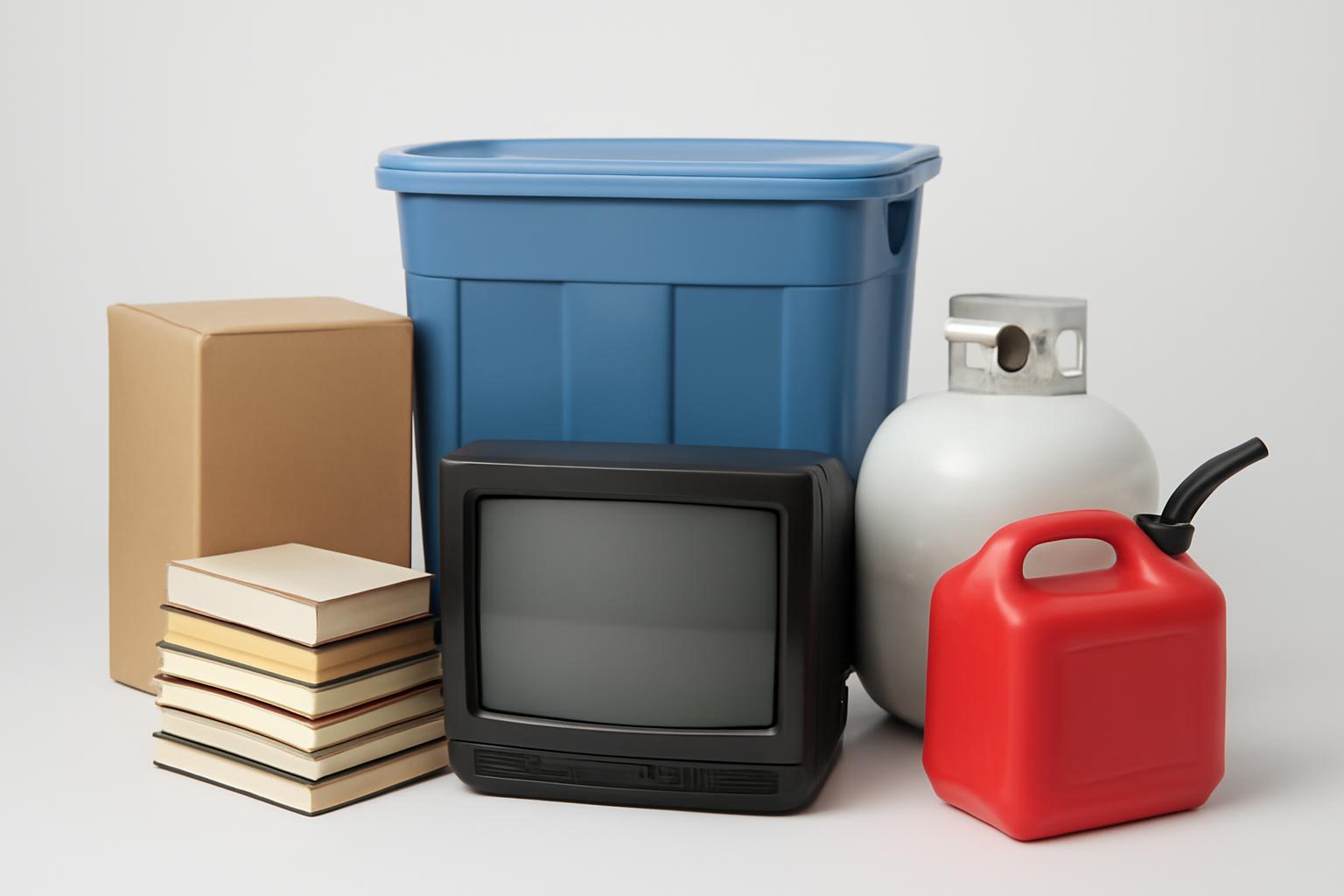
Every storage lease has a prohibited items list. Most people skim it. These are the categories that matter — either because storing them violates your lease (voiding insurance and triggering eviction), or because they cause damage to your other belongings even when the facility never finds out.
Items that void your lease and insurance
Food and perishables. This includes canned goods in some facilities, but especially anything that can rot, ferment, or attract pests. One bag of birdseed or a forgotten cooler with residue can trigger a rodent infestation that spreads to adjacent units. Facilities that discover food terminate leases and charge remediation costs ($200–$800 is typical). Your insurance claim for the damaged belongings will also be denied if the proximate cause is a lease violation.
Living things. No plants, no animals. This includes plants in soil (soil carries pests and moisture).
Flammable and combustible materials. Gasoline, propane tanks, paint thinner, acetone, motor oil — all prohibited under fire code, not just facility policy. If you’re storing a lawnmower, drain the tank completely. A motorcycle: drain gas and oil, disconnect the battery. Facilities can and do inspect, and the fine in some jurisdictions is separate from lease termination.
Firearms and ammunition. Prohibited at most facilities, even where legal to own. Some facilities are exceptions, but verify explicitly — don’t assume. Ammunition in particular is a fire suppression concern.
Illegal items. Obvious, but worth noting: storage units are not a gray zone. Facilities cooperate with law enforcement, and units can be searched with a warrant. Units are also occasionally opened during lien auctions, and found contraband is reported.
Items that damage your belongings even when allowed
Wet items. Nothing enters a storage unit wet. Damp cardboard is structurally compromised within days and becomes mold substrate. Wet furniture cushions will mildew in a sealed unit within a week. Let everything dry completely — minimum 24 hours in open air — before storing.
Pressurized aerosols in heat. Standard (non-climate-controlled) units in summer can reach 130–140°F. Aerosol cans — spray paint, WD-40, hairspray — can rupture at sustained temperatures above 120°F. If you must store them, use a climate-controlled unit or move them somewhere else in summer.
Unboxed electronics. Electronics should be in original or equivalent packaging with padding. Unprotected screens crack from vibration and thermal cycling. Hard drives degrade in high-humidity environments. Bubble wrap is not enough for a TV without a rigid outer box.
Leather furniture without breathable covers. Leather needs airflow. Wrapping it in plastic traps moisture and causes mold within 30–60 days in humid climates. Use cotton furniture pads or old sheets — breathable coverings only.
Documents in cardboard. Long-term document storage in cardboard boxes in a non-climate-controlled unit is a reliable way to destroy them. Silverfish, moisture, and thermal cycling degrade paper. Use plastic bins with lids and silica gel packets. For irreplaceable documents: scan them, don’t store the originals here.
The security reality
Self-storage security is frequently overstated in marketing. The core facts:
- Most facilities use a single gate PIN code shared across all tenants — a current or former tenant who has the code can enter at will
- Cylinder locks on the unit itself are your primary protection; the disc lock you use matters more than the facility’s gate
- Interior (indoor) units are meaningfully more secure than drive-up exterior units
- Units on upper floors in multi-story facilities see fewer break-ins than ground-floor exterior units
For genuinely irreplaceable items — jewelry, documents, family heirlooms — a bank safe deposit box costs $30–$80/year and provides categorically better security and environmental control than any storage unit.
What facilities actually care about
Facilities are primarily concerned with fire, pests, and liability. The items most likely to get your unit flagged during a visual inspection (fire marshal visits, maintenance checks) are: visible flammable containers, obvious pest attractants (food, plants), and running water or electricity that you’ve rigged yourself. Everything else is largely out of sight.
Know what your lease prohibits, comply with it, and carry your own insurance. The lease and the insurance policy define your rights in a dispute — and both are worth reading before you sign.