
Choose Storage Unit Size by What Actually Fits
A 5×10 unit holds 500 cu ft with a 10-ft ceiling but 375 at 7.5 ft. The right choice also depends on access lanes, usable stack height and what will not fit.
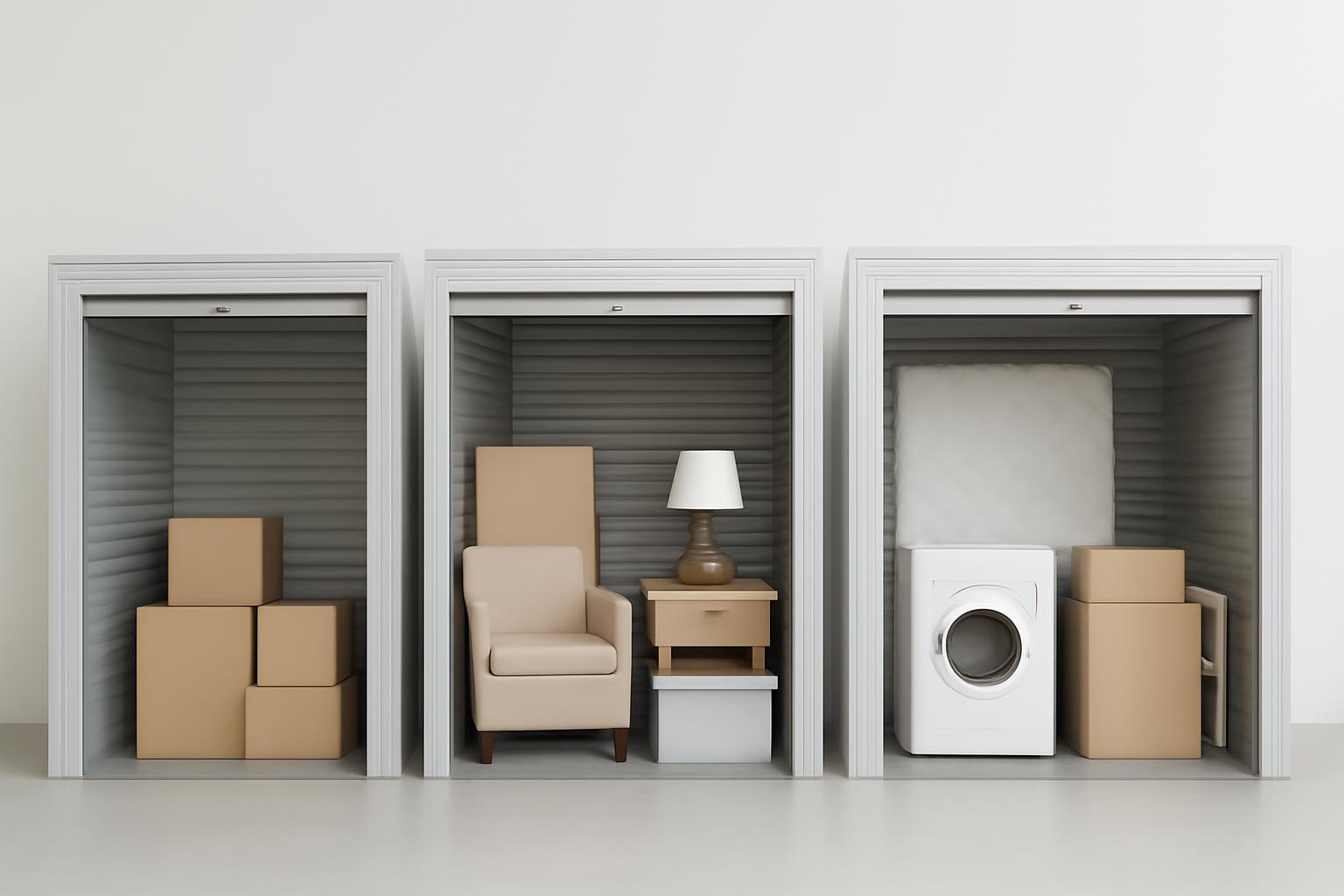
The most expensive mistake in self-storage is renting by feel rather than measurement. Facilities benefit when you upsize; you benefit when you don’t. Here’s what each common size actually holds.
The 5×5 (25 sq ft, ~7.5 ft ceiling = ~188 cu ft)
Think of a large walk-in closet. Realistic contents:
- A twin mattress set or a queen mattress alone (no box spring)
- 10–15 medium moving boxes stacked three high
- A bicycle, a few pieces of flat art, or seasonal sporting equipment
What it’s for: dorm overflow between semesters, a single room’s worth of furniture during a renovation, or long-term storage of one person’s archived files.
What won’t fit: a loveseat and a dresser together, a dining table with chairs, any appliance larger than a mini-fridge.
The 5×10 (50 sq ft, ~375 cu ft)
Half a standard one-car garage. This is the most commonly misjudged size — people think it holds more than it does once they stack items properly (aisle down the center, floor to ceiling).
Realistic contents:
- Contents of a studio apartment: sofa, queen bed, dresser, 20–25 boxes
- Or: a king mattress set plus a small dining set
- Or: a full set of patio furniture stacked flat plus seasonal items
Where people go wrong: they see 50 square feet and picture a room. A room has six feet of walking space; a storage unit is packed to the walls. Budget for ~60% of the floor area being accessible at any moment.
The 10×10 (100 sq ft, ~750 cu ft)
The standard one-bedroom apartment unit. Contents you can reliably fit:
- Full one-bedroom furniture: queen bed, dresser, nightstands, sofa, coffee table, 4-chair dining set
- 30–40 medium boxes stacked 3–4 high along walls
- A washer or dryer (not both, unless you remove the sofa)
At 10×10 you gain two walk-in aisles if you load intelligently — tall furniture along the walls, boxes in the center with a lane down the middle.
10×20 and larger: vehicle and full-house storage
A 10×20 (~1,500 cu ft) fits a mid-size car or the contents of a 2–3 bedroom home. It’s also the entry point for most indoor RV and boat storage. If you’re using it for household goods, you should be doing a garage-sale pass first — at this size, the monthly cost (typically $180–$320 in mid-tier markets) often exceeds the replacement cost of what you’re keeping.
The sizing shortcut
Measure your items before you call. Stack height matters more than floor area in most facilities (ceilings run 7.5–10 ft). A 5×10 with a 10-ft ceiling holds 500 cu ft; the same footprint at 7.5 ft holds 375. Ask the facility for ceiling height when comparing quotes — it’s rarely listed online.
Count your moving boxes and multiply by 1.5 cu ft each (medium boxes average 1.2–1.5 cu ft packed). Add your furniture pieces with rough volumes (a full sofa: ~60 cu ft). Leave 20% margin for access lanes.
Climate control: when it’s worth the premium
Climate-controlled units typically cost 25–50% more per month. Worth it for:
- Wood furniture (humidity warps it within one summer in humid climates)
- Electronics, instruments, vinyl records
- Anything with a leather or fabric surface stored longer than 3 months
Not worth it for: metal tools, bicycles, plastic bins of clothes you don’t care about, concrete or ceramic items, or anything going in for less than 60 days.