
A 10x20 unit provides 200 square feet, but its door, aisle and full monthly bill determine whether it works
See what fits in a 10x20 storage unit, how an access aisle changes capacity, and which fees, rate terms and restrictions to check before renting.
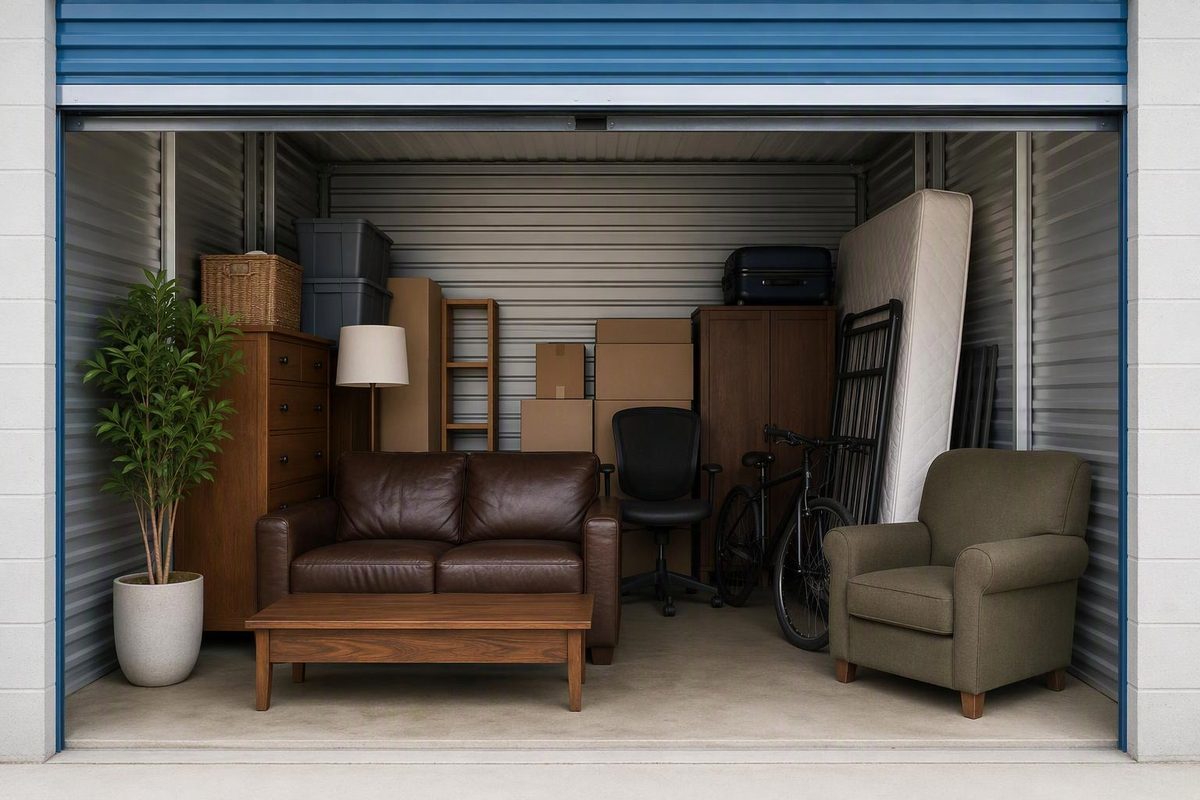
A 10x20 self-storage unit has a nominal 200-square-foot footprint. With an 8-foot ceiling, its gross volume is 1,600 cubic feet. That is a large unit, but neither number shows how much usable space remains after allowing for the door, irregular walls, safe stacking and an aisle.
Choose a 10x20 when you have a large household load, bulky pieces or a real need to reach items during storage. If your inventory fits inside a 10x10 on paper and you will unload it only once, compare the smaller unit first.
How big is a 10x20 unit in practice?
Nominally, it is 10 feet wide by 20 feet deep. Extra Space Storage and U-Haul describe this category as 200 square feet and about 1,600 cubic feet with an 8-foot height, while noting that height varies by location (Extra Space Storage, U-Haul).
Treat those figures as a category, not a construction drawing. Public Storage’s promotion terms say actual unit sizes may vary from the estimate and advise inspecting before renting (Public Storage). Before paying, measure or obtain written dimensions for:
- clear interior width, depth and height;
- door opening width and height—not just wall width;
- columns, pipes, sprinkler clearance and sloped ceilings;
- any lip, corner or hallway between the loading area and unit;
- elevator dimensions and weight limit for an indoor unit.
A 90-inch sofa may fit inside but still fail at a narrow door or tight corridor turn. Start with your longest, widest and tallest objects, then use the inventory method in our storage unit size guide.
What actually fits: a sample household load
A 10x20 could accommodate a load such as:
- a sofa, loveseat and coffee table;
- a dining table, six chairs and sideboard;
- two queen bed frames and mattresses;
- three dressers and four nightstands;
- a desk, office chair and two bookcases;
- a washer, dryer and refrigerator;
- a disassembled patio table with six chairs;
- roughly 60–90 medium moving boxes;
- several lamps, rugs and bicycles.
This is a planning example, not a capacity promise. A sectional, piano, oversized armoire, assembled bed frames or 150 loosely packed boxes can change the answer quickly. Measure the actual load and sketch each large item as a rectangle to scale. Use packed dimensions for furniture that can be safely disassembled.
Operators often market a 10x20 for the contents of three or four bedrooms, but that shorthand depends on the household and packing method. Extra Space says the unit can hold up to 250 medium boxes specifically when furniture is not also being stored (Extra Space Storage). “Four bedrooms” is not a capacity guarantee.
A center aisle uses 30% of the floor
A full-length 3-foot center aisle occupies 60 square feet: 3 feet × 20 feet. That leaves about 140 square feet beside it before allowing for clearance around awkward pieces. The aisle is worthwhile if it prevents a partial unload whenever you need a box at the rear.
For the sample load above, use three zones:
- Rear: bed components, disassembled tables and other items unlikely to be needed early.
- Sides: stable furniture and shelving, with heavy boxes low and lighter boxes above. Do not exceed the capacity of a box, shelf or piece of furniture.
- Front: seasonal items, documents, tools and labeled boxes you expect to retrieve.
Keep the center route and door sweep clear. Face labels toward the aisle and number boxes against an inventory. For repeat visits, organize storage around access frequency, not just maximum density.
If everything will leave on one move-out day, a tighter block pack may be sensible. If you need monthly access, paying for a 10x20 with an aisle can be better value than cramming the same goods into a 10x15 or 10x10 unit.
When to choose another size
Consider a smaller unit when your measured load is mostly boxes plus one or two rooms of furniture, the large pieces disassemble and you do not need a permanent aisle. Even a modest monthly difference adds up during a long rental.
Choose the 10x20 when a smaller unit technically holds the load but blocks access, or when you need more floor area to maneuver bulky furniture after it passes through the door.
Consider a larger unit or two units for oversized equipment, a very full large-home move, extensive business inventory or separate access needs. Two units may cost more, but they can separate business stock from household goods and shorten retrieval time.
A car may fit dimensionally without being permitted in the particular unit. U-Haul says a small car can fit in a 10x20, while Extra Space calls 10x20 the smallest suitable category for most cars (U-Haul, Extra Space Storage). Confirm that the facility allows vehicle storage, then check the door opening, vehicle length and required registration, insurance and fuel rules.
Compare the complete bill
There is no single national price that can settle a local rental decision. Availability, access type and climate features all affect the quote. Compare each candidate over the period you realistically expect to rent:
Expected cost = move-in charges + rent + required protection + lock + estimated rate changes + applicable move-out charges
Get these details in writing:
- whether the displayed rate is promotional and when it ends;
- administrative, setup or deposit charges;
- required insurance or protection-plan cost and whether outside coverage is accepted;
- required lock type and purchase price;
- applicable taxes;
- late, cleaning and lock-cut fees;
- rate-change notice and any guaranteed-price period;
- move-out notice, billing anniversary and proration policy.
Operator policies differ. As of September 30, 2026, Public Storage says its rentals are month-to-month, rates may change and customers receive at least 30 days’ advance notice; its promotion disclosure also says administrative fees and other charges can apply (Public Storage). U-Haul says its owned-and-managed locations charge no deposit or administration fee and lock base rent for the first 12 months, while affiliate locations may differ (U-Haul). The lease for the exact facility controls. Use our storage cost checklist to compare totals.
Insurance also belongs in the calculation. Public Storage requires customers to insure their stored goods under its rental agreement, while noting that Public Storage itself does not insure them (Public Storage). Ask whether an existing homeowners or renters policy qualifies, then verify its off-premises limit, exclusions and deductible.
Check restrictions before loading
Large units make it easy to include something the lease forbids. Public Storage lists hazardous materials, illegal items, perishables, liquids, plants and animals as prohibited examples, and it prohibits living or working in the space (Public Storage). Your facility’s lease controls and may be broader. Review what not to store before packing fuel-powered equipment, food, chemicals, plants or anything wet.
Rent only after checking the exact unit’s usable dimensions, door opening, access route and complete written price. Those details are more reliable than a “four-bedroom” or “one-car garage” label.