
Storing Cedar Chest Furniture Right: Avoid Warping, Extra Fees, and Lease Issues
Wood furniture can warp within one humid summer; climate-controlled units are estimated to cost about 25% to 50% more monthly. See when the premium makes sense.
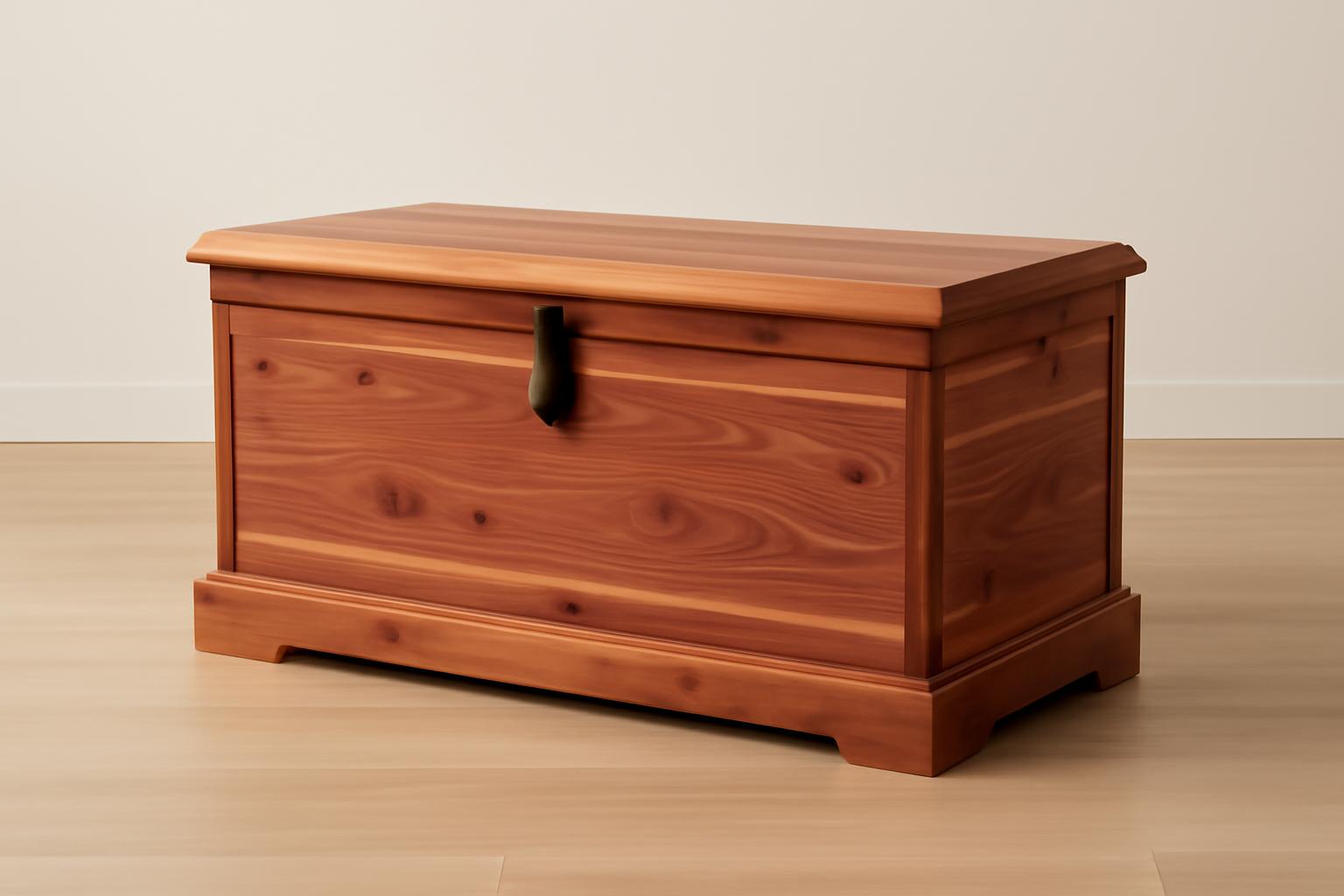
If you searched for cedar chests furniture, you may be comparing sizes, styles, or brands. But once a cedar chest has to survive a move, renovation, estate cleanout, or long gap between homes, the practical question changes: how do you store it like furniture, not like a generic box?
That distinction matters. A cedar chest is often small enough to fit in a modest unit, yet valuable enough that the wrong storage setup can cost more than the rent you thought you were saving. Heat, humidity, trapped moisture, access, insurance, and fee creep usually matter more than the bare footprint.
The good news is that most storage mistakes with cedar chests are predictable. If you size the unit by real measurements, prep the chest carefully, and budget for the true monthly cost instead of the teaser rate, you can usually protect the piece without over-renting.
What Makes Cedar Chests Unique for Storage
One reason cedar chests confuse renters is that the category is broad. A retailer’s all-cedar lineup lists four sizes from 24 x 13.5 x 14.5 inches to 42 x 18.5 x 19.5 inches, which is compact compared with many bedroom pieces and puts a lot of cedar chests into the small-unit conversation rather than the garage-size-unit conversation (Amish Handcrafted).
But that is only one product line, not a universal market standard. Another seller’s solid-cedar blanket chest comes in 38-inch and 48-inch widths, both at 20.5 inches deep and 20.5 inches high, which shows how quickly a foot-of-bed style chest can become a more substantial furniture item (Amish Direct Furniture).
Retailers also commonly market cedar by its scent and insect-related appeal. DutchCrafters, for example, presents cedar hope chests in terms of aroma, rustic appearance, and insect-repelling reputation (DutchCrafters). For storage planning, though, that is best treated as seller framing, not as a reason to relax about moisture or heat.
In practice, a cedar chest should be handled as wood furniture first. The priorities are wood stability, lid alignment, hinge protection, finish protection, and the ability to inspect the chest without unpacking half the unit. That usually means lighter stacking, better airflow, and more caution about moisture than you would use for plastic bins or ordinary boxed household goods.
That furniture-first mindset also helps with the search-intent mismatch around this topic. People often approach cedar chests as decorative or heirloom bedroom pieces, but the storage challenge is more technical than aesthetic. Whether the chest is all cedar, hardwood with cedar lining, a blanket chest, or a family hope chest, the storage plan should start with dimensions and wood sensitivity, not with the romantic idea that it is “just a storage box.”
Choosing the Right Storage Unit Size for Cedar Chests
Start with the chest, not with a vague label like “small furniture.” DutchCrafters’ featured medium cedar chest is listed at 36 x 17.5 x 18.5 inches, which is a useful working example for what one real cedar chest looks like in storage planning.
From there, use a sizing framework grounded in actual cubic capacity. LockerHelp’s guide to what actually fits in a 5x5, 5x10, and 10x10 storage unit puts a 5x5 at about 25 square feet and roughly 188 cubic feet with a 7.5-foot ceiling, a 5x10 at about 375 cubic feet, and a 10x10 at about 750 cubic feet. The same guide says a 5x5 realistically holds a twin mattress set or 10 to 15 medium boxes, a 5x10 can hold studio-apartment contents including a sofa, queen bed, dresser, and boxes, and a 10x10 fits a full one-bedroom furniture load.
For a full bedroom set, or when the chest is only one piece in a broader household move, a 10x10 is the better planning baseline.
The mistake many renters make is sizing only by floor area. LockerHelp’s size guide says typical facility ceilings run from 7.5 to 10 feet, and that difference changes usable capacity more than many people realize. The same source assumes you will stack toward the ceiling while preserving access lanes, which is why a unit that “fits” mathematically may still be frustrating in real use.
That point matters even more with two chests.
A simple sizing process keeps you honest:
- Measure the widest, deepest, and tallest point of the chest.
- Add space for blankets, pads, or a loose fabric cover.
- Decide whether you need to open the lid inside the unit or only inspect the exterior.
- Reserve at least one narrow access lane.
- Compare prices only after you know the real footprint of the loaded layout.
Repacking a cramped unit is not just annoying; it also increases the risk of scraped finishes, stressed hinges, and rushed decisions.
Prep Checklist: Cleaning and Protecting Cedar Chests Before Storage
Most avoidable storage damage starts before the truck door closes. A cedar chest does not need a museum protocol, but it does need to enter storage clean, dry, and protected in a way that still allows airflow.
Start with the exterior, not an aggressive full-piece cleaning. In a cedar chest refinishing guide, Dunn Lumber begins by washing the outside with Murphy’s Oil Soap to remove dirt and reveal scratches, while leaving the cedar-lined interior alone when it is already in good condition (Dunn Lumber). That supports the safest prep approach for storage: clean the outside gently and avoid unnecessary wetting of the interior.
Next, empty the chest completely. That does two things. First, it removes hidden moisture or odor sources. Second, it prevents loose objects from shifting, scraping the lining, or pushing upward against the lid during transport. If the chest has a tray, loose insert, detachable feet, or removable hardware, pack those separately and label them now.
Drying is the step people rush. LockerHelp’s prohibited-items guidance says nothing damp should enter storage and that wet furniture cushions can mildew within a week in a sealed unit; it also recommends letting items dry in open air for at least 24 hours before storage. Even though that warning is not cedar-specific, the lesson applies directly to a chest that can trap moisture once closed.
Cover choice matters too. For long-term storage, a breathable layer is safer than tight plastic. A moving blanket, cotton furniture cover, or clean sheet protects against dust without sealing in residual dampness. LockerHelp warns that plastic wrapping can trap moisture and contribute to mold problems on leather in humid conditions; the same moisture logic is a good reason not to shrink-wrap a wood chest for months.
Elevation is also worth the effort. It also makes the piece easier to inspect and less likely to pick up grime from repeated traffic near the door threshold.
A practical prep checklist looks like this:
- Dust and gently clean the exterior
- Empty the interior fully
- Remove loose trays, inserts, or hardware
- Label keys and small parts
- Let the piece dry completely before loading
- Use a breathable fabric cover rather than tight plastic
- Elevate the chest off the floor
- Photograph all sides before move-in
Those photos are simple but useful. If you later notice finish haze, scratches, swelling, or lid misalignment, you will have a baseline for comparison instead of relying on memory.
Climate Control: Essential for Cedar Wood in Humid Areas
LockerHelp’s size guide says wood furniture can warp within one summer in humid climates and estimates that climate-controlled units usually cost about 25 to 50 percent more per month. The same guide also says climate control is often not worth the premium for storage periods under 60 days, but is worthwhile for wood furniture in humid conditions. That is best read as a planning rule of thumb, not a universal law, but it is a practical one.
Heat is the other side of the risk. LockerHelp’s prohibited-items guide says standard non-climate units can reach 130 to 140 degrees Fahrenheit in summer. That figure appears in the context of heat-sensitive belongings and aerosols, but it is still relevant to any finished wood furniture sitting through a long hot season.
Put together, those two points create a clear decision framework:
- Short storage in mild weather and a dry climate: a standard unit can be reasonable.
- Storage through humid summer conditions or for an open-ended timeline: climate control is the safer choice.
- A sentimental, older, or hard-to-replace chest: lean climate-controlled even when the price comparison is close.
The premium is real, but so is the risk you are paying to reduce.
So no, climate control is not automatically mandatory for every cedar chest. But if the storage period is long, the weather is humid, or the chest matters more than its resale value, the monthly premium is often cheaper than the downside of getting the decision wrong.
Full Cost Breakdown: Beyond the Advertised Rate for Chest Storage
Storage pricing looks simplest right before checkout.
LockerHelp’s guide to what you actually pay beyond the advertised storage rate gives a useful example: an advertised $89 per month rate for a 5x10 climate-controlled unit in a mid-size U.S. market works out to about $107 per month on a first-year average once fees and insurance are included. The same guide says common add-ons include a one-time admin fee of $15 to $35, on-site locks around $15 to $25 versus roughly $9 to $14 elsewhere, facility insurance often around $12 to $20 per month, and standalone storage coverage around $8 to $12 per month for $5,000 of coverage.
That is why the true budget conversation for cedar chest storage is not just “Can I find a cheap 5x5?” It is:
- What is the actual move-in total?
- Is climate control already included?
- Is the quoted rate web-only?
- Can the admin fee be waived?
- What lock type is required?
- Can existing renter’s or homeowner’s coverage satisfy the insurance requirement?
- How fast do rates rise after move-in?
The last question matters more than many people expect. LockerHelp says month-to-month facilities commonly reprice after 3 to 6 months and cites examples of 20 to 40 percent increases for existing tenants at national chains. If the chest is only going into storage for a few weeks, that may not matter much. If it is staying there through a long move, probate process, or indefinite housing gap, it matters a lot.
For cedar chest storage specifically, a slightly higher quote on the right unit can be cheaper overall than a low teaser rate on the wrong one. Saving a little on rent does not help much if you later pay transfer costs, buy an overpriced lock at the counter, or accept rate hikes because moving the chest again feels worse than the bill.
Prohibited Items and Risks When Storing Chests
A cedar chest should not become a hidden second storage unit full of risky items.
LockerHelp’s guide to what not to store because it violates leases or causes damage says storage leases commonly prohibit food and perishables, living things, flammable and combustible materials, and often firearms and ammunition. The same guide warns that lease violations can lead to eviction, remediation costs, and denied insurance claims when the prohibited item caused the loss. It also says facilities can and do inspect.
Avoid storing these inside:
- Food, birdseed, pet treats, or anything likely to attract pests
- Wet or recently cleaned textiles
- Solvents, aerosols, fuels, or paint-related products
- Loose chemicals that can spill or off-gas
- Anything heavy or awkward that prevents the lid from closing naturally
Even allowed items can still be bad storage choices. LockerHelp says wet cushions can mildew within a week in a sealed unit. The same warning applies to blankets, quilts, pillows, or clothes tucked into a cedar chest “just for now.” If they are not fully dry, the chest becomes a moisture trap.
Loose items are another avoidable problem. They shift during transport, mark the lining, and complicate inspections later.
And if you are relying on insurance, do not treat lease rules as technicalities. If a prohibited item created the damage, your claim position is weaker from the start.
Arranging Chests in the Unit for Access and Protection
Loading order matters more than people think. A cedar chest should go in as a destination piece, not as leftover filler once everything else is already jammed into the unit.
That protects it from traffic, threshold dust, and any rain or grime that blows in when the unit is opened. At the same time, keep it reachable. A chest you cannot inspect is a chest you are effectively storing blind.
LockerHelp’s size guide describes the smartest general layout for packed units: tall items along the walls, boxes stacked toward the center, and a lane preserved for access. The same guide says packed units often leave only about 60 percent of floor area meaningfully accessible at one time, and that 10x10 loads commonly assume boxes stacked 3 to 4 high. In other words, “it fits” is not the same as “you can get to it.”
A few layout rules work especially well for cedar chests:
- Do not bury the chest behind a wall of cartons
- Do not stack heavy boxes on the lid
- Keep some air space around the sides
- Keep it back from the threshold if dust or wind-driven rain is a concern
- Preserve enough clearance to inspect lid alignment and hardware
- Put heavier, stable items on the perimeter before lighter box stacks
If the chest is one of the larger blanket-chest styles, leave even more room than you think you need. A piece that measures around 48 inches wide may still fit easily, but the useful storage plan depends on whether you can check the hinges, open the lid if necessary, and avoid scraping the finish while moving past it.
Insurance deserves one last look during load-in. LockerHelp’s cost guide says many renter’s and homeowner’s policies cover off-premises stored belongings at about 10 percent of the personal property limit, but you should verify the exact language before relying on that number. Cheaper coverage only helps if the policy actually applies to the loss you are worried about.
For most owners, the best arrangement is not the densest one.
Maintaining Cedar Chests During and After Storage
A cedar chest should not disappear into storage and then surprise you a year later.
These inspections do not need to be frequent, but they should be deliberate.
Once the chest comes home, give it a stable indoor environment before judging its condition. Amish Direct Furniture’s care notes for its solid-cedar blanket chest recommend indoor humidity around 40 to 45 percent, plus avoidance of direct sun and heat. Those are product-specific care notes, not a universal wood standard, but they are a reasonable post-storage benchmark for a solid-cedar piece.
If the chest picked up light scratches or old water marks during the move, start conservatively. Dunn Lumber recommends beginning with mild restoration methods such as Howard’s Restor-A-Finish and fine steel wool before moving to more aggressive work. That is a useful limit for this topic: post-storage touch-up can make sense, but full refinishing is not the default answer to every mark.
A good post-storage reset looks like this:
- Move the chest into a stable indoor room.
- Let it acclimate before making cosmetic judgments.
- Remove the cover and dust the piece thoroughly.
- Check lid movement, hinges, and lock function.
- Confirm the interior smells dry rather than musty.
- Address only minor finish issues first.
- Keep it away from direct sun and heat vents long-term.
That final step is easy to overlook. A chest that survived storage well can still develop problems if it comes out of the unit and goes straight against a sunny window wall or a heating register.
The main goal is preservation, not showroom perfection. If you size carefully, prep thoroughly, avoid trapped moisture, and pay attention to the real cost structure before signing, cedar chest storage is usually straightforward. The trouble starts when people rent by feel, seal the chest in plastic, bury it in the back of a unit, and assume the low advertised rate was the whole story.
Will a 5x5 unit hold my cedar chest furniture?
Usually, yes for one chest. LockerHelp’s size guide puts a 5x5 at about 188 cubic feet with a 7.5-foot ceiling, and retailer examples include cedar chests from 24 inches wide up to about 42 inches wide, so one chest normally fits with at least some additional boxes. The real question is access, not pure fit.
If you want easy inspection, or if you have two medium chests plus other furniture, a 5x10 is usually the more realistic choice.
Is climate control necessary for wooden cedar chests?
Not always. But for long storage in humid conditions, it is usually the safer choice. LockerHelp says wood furniture can warp within one summer in humid climates, that climate-controlled units commonly cost 25 to 50 percent more, and that the premium is often not worth it for storage under 60 days.
What hidden fees add to cedar chest storage costs?
The main ones are the admin fee, lock purchase, insurance, and later rate increases. In LockerHelp’s example, an advertised $89 monthly 5x10 climate-controlled rate becomes about $107 per month on a first-year average after fees and insurance are included.
If the chest may stay in storage for several months, ask about repricing policy too. A later 20 to 40 percent increase can matter more than the move-in fee.
Can I store items inside my cedar chest?
Yes, but selectively. Keep it to clean, dry, soft items if you store anything inside at all. Do not use the chest for food, perishables, wet textiles, chemicals, or flammable items, because those categories are commonly prohibited in storage units or create mold, odor, and pest risks.
For long storage, the simplest answer is often the best one: store the chest empty unless you have a specific reason not to.