
How to Free a Stuck School Locker Lock Without Forcing It
Retry the correct combination, gently relieve door pressure, and identify when a stuck school locker needs a custodian rather than more force.
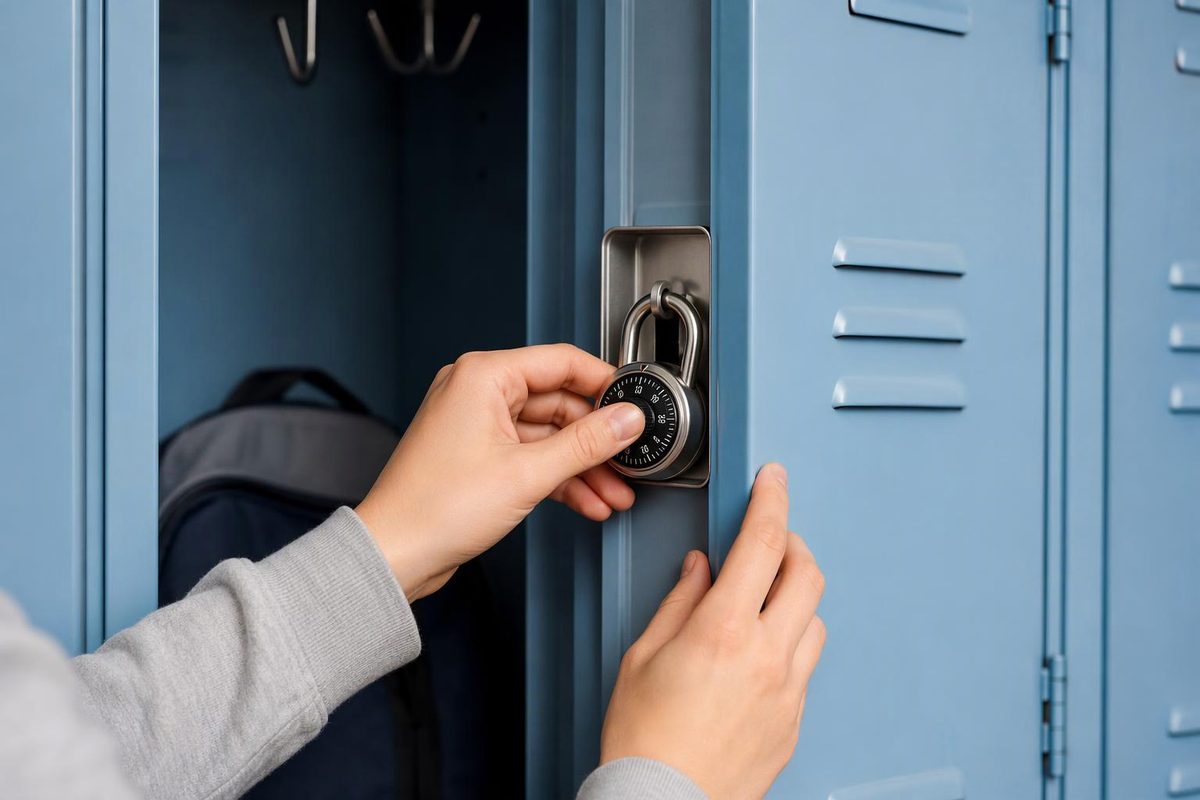
First, retry the correct combination slowly. If the door stays shut, try gentle inward pressure while using its normal opening mechanism. If the dial, key or handle feels seized or requires force, stop and ask school staff for help.
These checks are for your assigned locker, using your own combination or key—not for bypassing a lock. Don’t kick the door, pry it open or twist a key with pliers.
1. Rule out a dialing mistake
Check that you are at the right locker and have its current combination. Release any pull on the door or padlock, then start the opening sequence again from the beginning. If you overshoot a number, restart rather than backing up slightly.
For a standard Master Lock 1500D dial padlock, the manufacturer’s instructions are:
- Turn the dial three times to the right, stopping on the first number.
- Turn left, passing the first number and stopping on the second.
- Turn right and stop on the third number.
- Pull up on the shackle—the curved metal loop.
These are Master Lock’s instructions for that model, not a universal sequence for every school lock.
A built-in dial may work differently. Some Master Lock built-in models require you to stop at the third number and lift the locker handle; others require continued clockwise turning until the dial stops. Follow the school’s directions for your lock rather than applying padlock instructions to it. The manufacturer’s built-in lock operating sheet distinguishes these opening actions.
If you are unsure of the combination, ask the office to verify it. Don’t try resetting a school-managed lock yourself.
2. If the door stays shut, gently relieve pressure
A stuck door does not necessarily mean a broken lock. An obstruction can put pressure on the latch and prevent it from releasing. SchoolLockers’ jammed-locker guidance recommends relieving that pressure during the opening sequence.
Try this low-force check:
- Place your palm flat on the door near the handle, keeping fingers away from the door gap.
- Press gently inward—only enough to take pressure off the latch, not bend the panel.
- Unlock using your combination or key. Remove the padlock if applicable, and operate the normal handle or release as instructed.
- Ease off the inward pressure and gently pull the door open.
Stop if this does not work. Don’t escalate to kicking, pounding, pulling with a friend or using tools.
If a removable padlock opens and comes off but the door still will not open, the padlock is no longer what is holding it shut. Tell staff that the door or latch remains stuck.
3. Know when it needs maintenance
Ask a teacher, the school office or a custodian for help if:
- The dial feels seized or unusually stiff.
- The correct key will not turn, or a key has broken inside.
- The handle will not lift or move normally.
- The lock releases but gentle door pressure does not help.
- The door is visibly bent or the problem keeps returning.
Wear, debris, corrosion and door misalignment can all cause sticking. For keyed lockers, a bent or worn key can also be responsible; increasing force risks breaking it. Total Locker Service’s troubleshooting guide recommends checking the lock and alignment rather than forcing the mechanism.
Don’t spray an unidentified school lock. Don’t assume general lubricant advice applies: Master Lock’s maintenance guidance explicitly says not to use dry graphite or silicone lubricant. Let staff identify and service school-owned hardware.
Once the locker opens
Remove any book, bag strap or clothing caught near the latch, and leave that area clear. If the locker still sticks after the obstruction is removed, report it before closing your belongings inside again.
A useful report is specific: “The combination works, but the handle won’t lift,” or “The padlock is off, but the door stays shut.” That helps staff distinguish an access problem from a door or lock repair—the same basic maintenance distinction used for managed storage lockers.