
Assign Workplace Lockers by Need, Then Use a Clear Tie-Breaker
A practical locker allocation plan for storage-facility staff: assess usable capacity, protect access needs, allocate fairly and reclaim unused space.
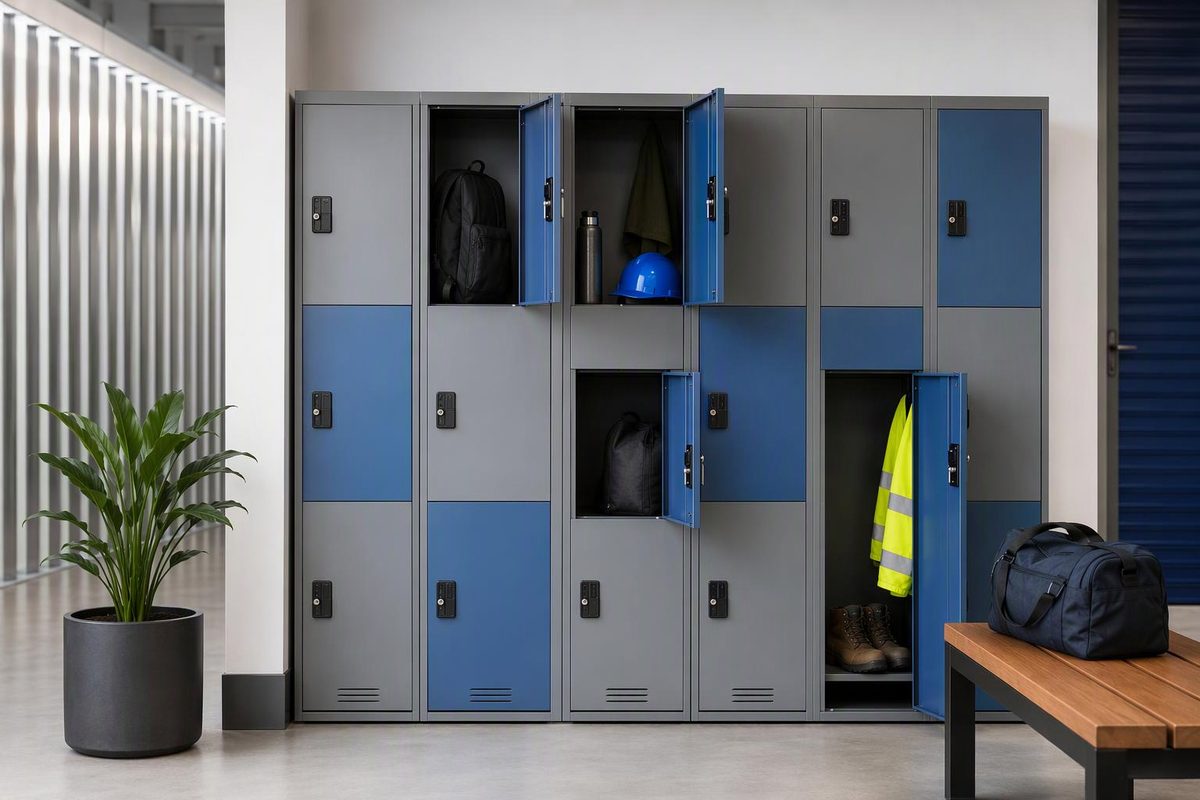
Assign lockers by practical need first, then use a published tie-breaker for equally eligible requests. A lottery is a useful starting point when demand exceeds supply; a dated waiting list can handle later vacancies. Avoid making the best lockers a permanent reward for seniority or early arrival, but check existing employment agreements before changing allocation rules.
For a self-storage facility, this means managing staff belongings separately from customer units, maintenance supplies and business inventory. The aim is usable, secure storage during work—not identical locker numbers regardless of what each employee needs.
1. Count usable lockers, not just doors
Make a numbered inventory showing each locker’s:
- Internal dimensions and clear door opening.
- Shelf and hook positions.
- Location, access hours and lock type.
- Condition, including broken locks or doors.
- Accessibility features and clear approach space.
Check the actual load: a backpack and coat need different space from boots and a change of uniform. Do not count a broken locker as available or assume an upper-tier compartment is usable by everyone.
Ask staff whether belongings must stay overnight, which shifts they work and what size they need. Collect functional requirements through a private request route; do not ask people to explain medical conditions on a shared sign-up sheet.
2. Set priority rules before accepting requests
Use this order as a proposed operating policy, rather than a universal legal formula:
| Allocation step | What to do |
|---|---|
| Accessibility and accommodation needs | Resolve these individually before general allocation; identify suitable locations and hardware. |
| Essential work-storage needs | Provide appropriate space for required clothing or equipment that cannot reasonably be stored elsewhere. |
| Other personal-storage requests | Allocate remaining suitable lockers using the same published process for everyone. |
An employee who needs a reachable lock should not have to win a lottery against someone who merely prefers that locker. In the United States, the EEOC explains that covered employers must provide reasonable accommodation to qualified employees with disabilities unless it causes undue hardship, including accommodation for equal access to employment benefits. It also says employers may not tell coworkers that an employee is receiving a reasonable accommodation, because that usually discloses a disability. Keep medical information and accommodation reasons out of the shared allocation list. EEOC accommodation guidance
Check local workplace requirements separately. For example, Great Britain’s HSE says workers must have access to clothing storage and somewhere to change when special work clothing is worn. That is not a worldwide requirement for one permanently assigned locker per employee. HSE workplace welfare guidance
3. Choose fixed, shift-use or hybrid allocation
Fixed lockers suit people with an ongoing need to leave permitted belongings between shifts. They offer continuity but can tie up space when staff are absent.
Shift-use lockers suit belongings brought in and taken home each working day. State the release time as the end of the employee’s shift—not midnight—and allow for cleaning and shift handover.
A hybrid arrangement combines a limited fixed allocation with a shared pool. NIH’s policy for specified non-dedicated lockers in Montgomery County, Maryland, provides a real example of reserved and day-use lockers operating together, with reservations tracked and reviewed. Its bicycle-commuter priority serves NIH’s own policy goals; it is not a fairness rule other workplaces need to copy. NIH locker-use policy
Size the shared pool against peak simultaneous demand, including shift overlap, rather than total payroll. For an illustrative facility with 36 usable lockers, six fixed assignments leave 30 shared lockers. If up to 28 other staff need a locker simultaneously, there are two spare. If demand reaches 32, the plan is short by two; calling it “shared storage” does not solve the shortage. This calculation assumes those shared lockers suit the staff who need them. Check capacity separately for any constrained size or access requirement.
4. Make equal-priority allocation reproducible
For an initial oversubscribed allocation:
- Give every shift the same application window and access to the form.
- Match requests to suitable locker sizes and locations.
- Draw lots among equally eligible applicants where suitable supply is insufficient.
- Record the result and use the remaining draw order to start the waiting list.
For later applications, use a dated queue within each relevant need or size category. Publish the method, not private reasons for priority. Permit swaps through the administrator so the register stays accurate.
Review optional fixed assignments at a stated interval, such as every six months. If demand remains oversubscribed, time-limited terms can spread access more fairly than automatic renewal forever. Do not rotate an accommodation assignment as though it were an optional preference.
5. Put release and appeal rules in writing
A one-page policy should identify the administrator, eligibility, allocation method, assignment term, permitted contents, lock arrangements, lost-key procedure and appeal contact.
Also specify how departures, unused assignments and overdue shift-use lockers are handled. Give notice before routine clearance, document removed belongings and use a defined secure holding and collection process consistent with applicable law. NIH’s policy illustrates tagged notices and a lost-and-found procedure; its deadlines should not be treated as universal rules. NIH clearance procedures
Before buying more lockers, check whether the shortage is caused by genuine peak demand, unsuitable compartments or unreleased assignments. Add capacity when staff still lack suitable storage—not merely because every door has a name on it.