
Smart Ways to Pick Furniture That Does More in Tight Spaces
Use 30 to 36 inches as a target for main walkways. Check the delivery route, then ask whether you will use a second function often enough to justify it.
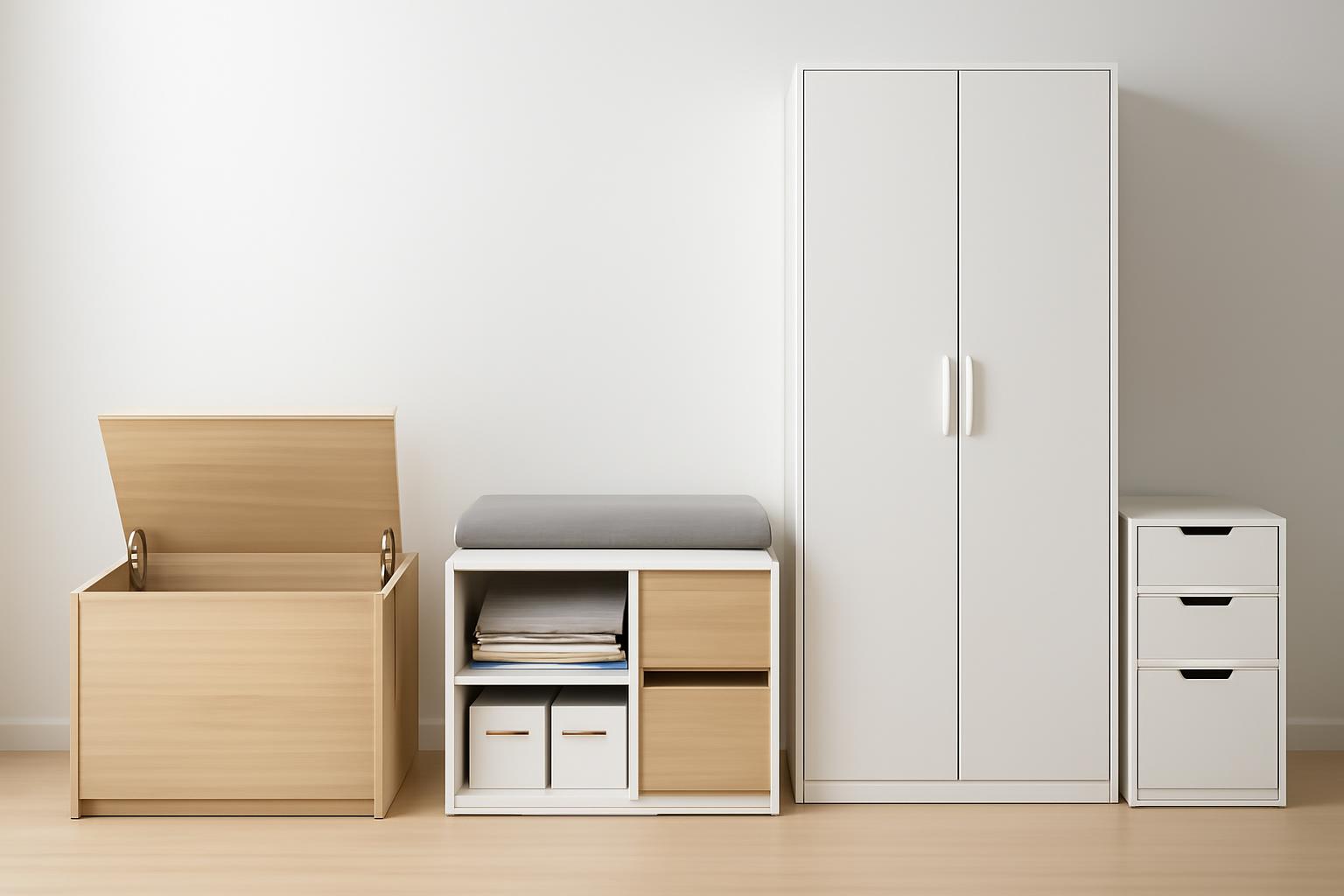
If you’re looking for the best tips for functional furniture, it helps to define “best” carefully. There is no single ranked formula that works for every home. What is consistent across interior-design guides, apartment-planning articles, retailer explainers, and storage advice is this: the most useful furniture earns its footprint by solving a real daily problem.
In a studio, dorm, small apartment, guest room, shared home, or in-between season of moving, furniture works harder when it can handle more than one job, reduce visible clutter, and adapt to changing layouts. That does not mean every room needs dramatic transforming pieces. Often, the most functional choice is simpler: a bench with hidden storage, a bed with drawers, a coffee table that lifts into a work surface, or a sofa that can host overnight guests when needed.
Because much of the available guidance on this topic comes from designers, apartment blogs, and furniture sellers rather than independent testing, the advice below is framed as common, evidence-informed rules of thumb, not hard standards. The goal is practical: help renters, movers, students, and homeowners choose furniture that fits real routines now and causes less friction later.
Understanding Functional Furniture Basics
Across guides from outlets like Next Door Interior Design and Transformer Table, functional furniture is usually described as furniture that improves usability in a room by doing one or more of the following:
- serving multiple purposes
- changing form for different uses
- including built-in storage
- helping a room stay organized without requiring extra pieces
That means multifunctional furniture is part of the broader functional-furniture category, but not the whole category.
A bookshelf, for example, may be functional simply because it keeps a small room organized and uses wall height well. A sofa bed is multifunctional because it converts from seating to sleeping. A storage ottoman can do both: it acts as seating or a footrest while hiding blankets, chargers, toys, or seasonal items.
Common examples repeatedly named in functional-furniture guides include:
- sofa beds
- storage ottomans
- expandable dining tables
- lift-top coffee tables
- modular sofas
- platform beds with drawers
- wall-mounted or fold-down desks
- nesting tables
- Murphy beds or wall beds in very tight spaces
Why consider functional furniture at all? Mostly because space pressure makes inefficiency obvious. In apartments, dorms, and shared homes, separate furniture for every task can crowd walkways, add visual noise, and eat up storage quickly. Designer and small-space guides consistently frame functional furniture as a way to combine jobs into fewer pieces and reduce clutter.
It also matters during life changes. If you move often, host occasional guests, work from home part-time, or rotate belongings in and out of storage, adaptable furniture is easier to justify than single-purpose furniture that only works in one exact layout.
And this is not only a small-apartment issue. The same principles apply in larger homes too, especially in:
- guest rooms that double as offices
- family rooms that need hidden storage
- entryways that collect bags and shoes
- shared households where one room supports multiple routines
The most useful distinction is this: functional does not always mean transforming. Some of the best-performing pieces never fold, lift, or convert. A TV cabinet with closed storage, a bench with drawers, or a tall bookcase that uses wall height well may be more helpful in daily life than a dramatic convertible piece you rarely use.
The goal is not novelty. The goal is solving everyday problems with less clutter and less wasted square footage.
Measure and Plan Your Space First
Before comparing fabrics, finishes, or features, measure everything. This is one of the most repeated pieces of advice in planning guides from sources like The Nest Interior Design and Futonland, and it is easy to see why: a piece can look perfect online and still fail your room, your doorway, or your daily movement.
Start with the room itself. Note:
- overall length and width
- ceiling height
- alcoves, corners, and short wall segments
- built-ins or radiators
- window placement
- door swings
- outlets, switches, and vents
Then measure the route the furniture has to travel to get there. Apartment-focused guides especially stress the delivery path, including:
- front entry
- hallway width
- stairwells
- elevator dimensions
- interior doorways
- tight turns and diagonals
A sofa that fits your living room but cannot clear the stair landing is not functional. For renters, students, and frequent movers, delivery-path planning is part of the buying decision.
Once you have dimensions, test the layout before you buy. Multiple guides recommend using painter’s tape on the floor to outline the footprint of a sofa, bed, desk, or table. That simple step helps you catch problems early:
- Does the front door still open fully?
- Can you get to the closet without turning sideways?
- Will a drawer hit the bed frame?
- Can a desk chair pull back far enough to be usable?
Measurements tell you what fits. Mock layouts tell you what works.
A commonly repeated planning target in small-space guides is about 30 to 36 inches for main walkways. Treat that as a useful target, not a mandatory standard. Some secondary paths can be tighter. Busy routes between doors, beds, and closets may need more. The point is not to hit a magic number; it is to keep the room easy to move through.
Scale and proportion matter just as much as raw dimensions. The Nest Interior Design and other layout guides emphasize that furniture should fit the room without making it feel crowded or strangely empty.
A few planning checks help:
-
Match furniture mass to room size. Width matters, but so do thick arms, deep seats, bulky bases, and tall backs.
-
Consider height, not just floor area. In tight homes, tall shelving, stacked storage, and lofted designs can use ceiling height more effectively than wide low pieces.
-
Protect usable clearances. Leave room for drawers to open, leaves to extend, and chairs to pull out.
-
Plan around the room’s true job. A room that functions as office, dining area, and lounge needs different furniture than a room used mainly for sleeping.
-
Check awkward architecture early. Odd corners, sloped ceilings, radiators, and off-center windows can make a standard-size piece feel wrong even when the measurements technically work.
A final point: online dimensions alone are not enough. In small homes especially, a good functional piece has to pass three tests at once:
- it fits the room
- it fits the route into the room
- it fits the way you actually move through the room
Prioritize Multifunctional Pieces
Once the room is measured, focus on furniture that solves more than one regular need. That word matters. A multifunctional piece is most valuable when it supports something you actually do week after week, not an imaginary scenario once a year.
A useful starting filter is to ask:
- Do you need guest sleeping space?
- Do you work from the living room or bedroom?
- Do you eat at the same surface where you study?
- Do you need hidden storage for daily clutter?
- Are you likely to move within a year or two?
- Are you willing to open, close, lift, or reconfigure the piece often?
That last question is easy to ignore, but it is one of the most important. A convertible piece only stays functional if its extra mechanism fits your routine.
A simple buyer framework
Before choosing any multifunctional piece, run it through this checklist:
-
Frequency of use Will you use both functions often enough to justify the compromise?
-
Conversion effort How many steps does it take to switch modes? Do you need to clear the surface first?
-
Comfort in primary mode If it is mainly a sofa, is it still a good sofa? If it is mainly a desk, is the working height and depth actually usable?
-
Storage burden created by flexibility If a table expands, where will the extra chairs go? If a bed folds away, what has to be moved first?
-
Future adaptability Will the piece still work if you move to a different apartment or use the room differently next year?
With that framework in mind, these are the categories most often recommended across functional-furniture and small-space sources.
Sofa beds
Sofa beds are one of the clearest examples of multifunctional furniture, and guides from Next Door Interior Design, Avenue Realty, Broadstone, and others consistently point to them as a strong small-space option.
Their main advantage is straightforward: they provide everyday seating and occasional sleeping in the same footprint. That makes them especially useful in:
- studios
- one-bedroom apartments
- guest rooms with a second purpose
- living rooms where overnight visitors are occasional but real
The main decision point is not whether a sofa bed is clever. It is whether you need the sleeping function often enough to make it worthwhile. If guest sleeping is a recurring need, the piece can eliminate the need for a dedicated guest bed. If not, the conversion mechanism may become dead weight.
When shopping, check both modes. Sit on it. If possible, test the sleeping surface. A piece that performs poorly in its primary use is not functional just because it converts.
Storage ottomans
Storage ottomans show up again and again in guides from Next Door Interior Design, Transformer Table, Broadstone, and other small-space sources because they can cover several jobs at once:
- footrest
- extra seating
- casual side or coffee surface
- hidden storage
They are often one of the easiest multifunctional categories to add because they do not usually require reworking the whole room. They can absorb the kinds of things that create daily clutter fast:
- blankets
- game controllers
- chargers
- kids’ items
- pet supplies
- entryway overflow
If you need hidden storage but do not have space for another cabinet, an ottoman is often a practical place to start.
Expandable tables
Expandable dining tables are frequently recommended in small-space guidance because they solve a common mismatch: the room needs to stay compact most days but occasionally support more people or more tasks.
One expandable table can function as:
- a small dining table
- a desk
- a project or homework surface
- a larger table for guests when opened
That is often more efficient than buying a permanently large table that dominates the room every day.
The tradeoff is setup. An expandable table is most useful when you are willing to manage leaves, chairs, and the occasional reset of the room. If your home is already short on chair storage, that matters.
Modular sofas
Guides from Castlery, Futonland, and other apartment-focused sources often recommend modular sofas for people who move or rearrange often.
Their advantage is adaptability. Separate sections can be configured to fit:
- different wall lengths
- changing room shapes
- open-plan layouts
- evolving seating needs
That flexibility matters if your next apartment may not resemble your current one. It can also help with cleaning, delivery, and storage because the sofa breaks into smaller components.
If frequent moves are likely, modular seating may be more functional over time than one large fixed sectional.
Lift-top coffee tables
Lift-top coffee tables are regularly mentioned in apartment guides because they can turn a lounging zone into a light work or eating surface while also offering hidden storage or a lower shelf.
In a small home, that can help when:
- a full desk is unrealistic
- you work occasionally from the sofa
- you want one table to cover multiple daily tasks
- you need concealed storage for small items
The key check here is stability and mechanism quality. If the top feels flimsy or awkward to operate, the convenience disappears quickly.
Fold-out and wall-mounted desks
When a separate office is not available, fold-out or wall-mounted desks can create a focused work area without permanently claiming floor space. Sources covering small apartments and student housing repeatedly recommend these for bedrooms, dorms, and studios.
They are especially useful when the room needs a visual reset at the end of the day. Closing the work surface can make a room feel less cluttered and more like a living space again.
These are most successful when placed where they are genuinely usable:
- near an outlet
- in workable light
- with enough clearance for a chair
- away from a door swing or bed edge that interrupts use
The broader lesson with all multifunctional furniture is simple: prioritize the pieces that solve your most frequent friction points first. In many homes that means:
- one sleeping solution
- one storage solution
- one work-or-dining solution
That will usually do more for daily function than buying several “clever” pieces at once.
Incorporate Built-In Storage Solutions
Transforming furniture gets attention, but built-in storage is often what makes a room easier to live in every day. Across living-room, bedroom, and small-apartment guides, storage-integrated furniture is one of the most consistent recommendations because it reduces the need for extra baskets, bins, and standalone cabinets.
In other words, hidden storage often does more practical work than transformation.
Living room storage furniture
Guides from Naan Furniture, Avenue Realty, Castlery, and others recommend storage-focused living room pieces such as:
- sideboards
- TV cabinets or media units
- benches with drawers or lift-up seats
- coffee tables with storage
- side tables with drawers
- bookcases with cabinet doors
Closed storage is especially useful in living rooms because it hides the kind of visual noise that makes a room feel busy:
- remotes
- cables
- chargers
- games
- paperwork
- spare throws
Open shelving can still be useful, but it tends to work best for items you can keep visually edited, like books, baskets, or a few display pieces.
Bedroom storage furniture
Bedroom guides commonly recommend storage beds, benches, and vertical pieces because apartments often ask bedrooms to absorb more storage than they should.
Practical examples include:
- platform beds with under-bed drawers
- storage beds with lift-up or drawer compartments
- benches at the foot of the bed
- under-bed drawer systems
- tall dressers or narrow bookcases that use height rather than width
A bed with built-in drawers can sometimes reduce the need for a second storage piece. That is especially helpful when the choice is between keeping floor space clear and adding one more dresser that tightens the room.
Vertical storage
When floor space is tight, the next move is usually upward. Castlery, Smarter Furnishings, and other small-space guides all emphasize vertical storage as a major space-saving strategy.
Useful vertical options include:
- tall bookcases
- narrow storage towers
- floating shelves
- wall-mounted cabinets
- wall hooks for bags, coats, or accessories
- stackable shelving
This is valuable in apartments, dorms, and entry zones where the floor fills up quickly but the walls are underused. It also helps keep cleaning easier because fewer items sit at floor level.
Flexible storage surfaces
Not every smart storage move needs to be a large cabinet. Some pieces create flexibility by giving you extra surface area only when needed.
Examples include:
- nesting tables
- small stools that double as side surfaces
- lightweight side tables that can move between zones
These are useful when you occasionally need more surface space but cannot devote permanent floor space to it.
Closed versus open storage
A useful planning question is not just how much storage you need, but what kind.
- Closed storage hides clutter and usually makes a room look calmer.
- Open storage feels lighter and is easier to access, but it asks for more discipline.
In most compact homes, a mix works best:
- closed storage for messy essentials
- open storage for books, decorative objects, or daily-use items
If a room feels crowded, ask one question before adding more furniture: Do you need another piece, or do you need better storage inside the pieces already planned?
Choose Durable, Easy-Clean Materials
Functional furniture should not only fit the room. It should also hold up to the way people actually live: spills, pet hair, repeated sitting, regular cleaning, occasional rearranging, and sometimes months in storage.
Easy-clean surfaces for daily use
Guides from Castlery and Avenue Realty commonly recommend practical material choices such as:
- stain- or spill-resistant upholstery
- leather or faux leather that wipes down easily
- low-pile rugs
- scratch-resistant finishes on hard surfaces
These are especially sensible in homes with:
- kids
- pets
- roommates
- heavy daily traffic
- furniture that must multitask all week
If removable or washable upholstery is available, that can also be a practical feature, particularly in student housing or highly used multi-purpose rooms.
Strong construction matters more than labels
Independent testing on furniture durability is limited in the evidence available here, so it is best to treat construction advice as shopping guidance commonly repeated by furniture sellers and durability-focused articles, not as a guaranteed hierarchy.
That said, the broad advice is consistent: inspect what supports the piece, not just what covers it.
Construction cues commonly associated with sturdier upholstered furniture include:
- solid or otherwise sturdy frames
- supportive spring systems
- secure joinery
- cushions that are not relying on very low-density foam alone
For storage furniture, practical inspection points include:
- drawer slides that move smoothly without wobble
- hinges that feel secure rather than loose
- shelves that do not visibly bow
- bases that sit level
- hardware that seems suitable for repeated opening, closing, or reassembly
A few useful in-person checks:
-
Sit, stand, and shift your weight. A sofa or chair should not creak, wobble, or feel unstable immediately.
-
Open every moving part. Try drawers, lift tops, leaves, folding desks, and storage lids more than once.
-
Check the mechanism in real use. A convertible piece that is awkward to open in the showroom is unlikely to improve at home.
-
Look at the wear points. Corners, seams, hinges, and drawer fronts usually reveal build quality faster than the fabric swatch does.
-
Ask about cleaning and disassembly. Removable covers, replacement hardware, and repeatable assembly can matter as much as finish color if the piece will move with you.
Think about storage conditions too
If self-storage may be part of the plan, materials matter there too. LockerHelp’s storage guidance notes that climate control is often worth considering for items like wood furniture, leather furniture, fabric-upholstered pieces, and electronics, especially when storage will last for months rather than a brief transition.
Leather deserves special care. LockerHelp specifically warns against sealing leather tightly in plastic in humid conditions; a breathable cover is safer because plastic can trap moisture and contribute to damage.
The broader point is easy to miss when shopping: durability is not only about surviving daily use. For some households, it also means surviving transport, storage, and reassembly without becoming a project.
Arrange for Traffic Flow and Daily Routines
Good furniture can still feel wrong in a poor layout. Guides from The Nest Interior Design, Avenue Realty, Castlery, Medium’s Organic Modernism, and Interiors by Steven G. all make the same larger point: functional rooms depend as much on arrangement as on product choice.
Start with the biggest piece
A practical layout usually begins with the room’s largest item, often the sofa or bed. Once that anchor is placed, smaller decisions get easier because you can judge what space remains for circulation, storage, and support pieces.
After placing the largest piece, check:
- where people naturally walk
- whether doors open fully
- whether windows or vents are blocked
- whether drawers and leaves can open
- whether there is at least one clear route through the room
Small-space guides commonly use about 3 feet, or 30 to 36 inches, as a comfortable planning target for main walkways. Again, treat it as a planning guide, not a hard requirement.
Create zones around actual use
One of the most practical ideas from routine-based design guidance is to map the actions the room must support, not just the look you want.
Ask:
- Where do shoes and bags land?
- Where do you charge devices?
- Where do you read, work, or watch TV?
- Where do guests sit?
- What needs to stay within arm’s reach?
- What path do you take most often in the morning and at night?
This is especially useful in shared rooms and open layouts. A studio may need sleeping, eating, and working zones in one open area. A living room may need both a seating zone and a light work zone. A guest room may need to function as office, storage room, and sleeping space depending on the week.
When you think in routines, furniture choices become clearer. A storage ottoman belongs where blankets pile up. A fold-out desk works best near power and usable light. A bench near the door often does more good than one placed for symmetry alone.
Anchor the room with a focal point
The Nest Interior Design and other layout guides recommend identifying a focal point so the arrangement feels intentional. Common anchors include:
- a window
- a fireplace
- a media wall
- artwork
- the clearest uninterrupted wall
- the room’s main activity
In a compact apartment, the focal point may simply be the best natural light or the only wall that can support a sofa and still leave circulation space. That is enough. Functional design does not require formal architecture.
Balance visual weight
Functional rooms also work better when heavy-looking pieces are not all concentrated in one area. Several layout guides describe this as balancing visual weight.
That can mean:
- placing tall storage on a different wall from the largest sofa
- mixing bulky pieces with raised-leg furniture
- using one strong anchor and several lighter support pieces
- keeping sightlines open where possible
This matters in small rooms because visual heaviness can make one side of the room feel blocked even when the measurements are technically fine.
Use flexible pieces where needed
Mobile or easily repositioned furniture helps rooms change with the day. Useful examples include:
- nesting tables
- lightweight side chairs
- stools
- modular sofa sections
These are especially helpful when one space shifts between relaxing, hosting, and working.
A reliable test for any layout is to simulate a normal day. Walk from the bedroom to the bathroom, from the kitchen to the sofa, from the desk to the closet. Function reveals itself in movement faster than in photos.
Tailor for Small Spaces and Apartments
Small homes make every furniture decision more visible. In a large room, an inefficient piece may be mildly annoying. In a studio, dorm, or compact apartment, it can dominate the entire layout.
Guides focused on small apartments and student housing tend to repeat three strategies most often:
- go vertical
- reduce visual heaviness
- choose furniture that can enter, exit, and adapt realistically
These principles matter most in tight spaces, but they also translate well to guest rooms, home offices, and other mixed-use zones in larger homes.
Go vertical first
When floor space runs short, vertical storage is often the most effective move available. Castlery, Smarter Furnishings, and Resource Furniture all emphasize this in different ways.
Useful examples include:
- tall bookcases
- stackable shelving
- loft beds with desks or storage underneath
- wall-mounted foldable desks
- wall beds or Murphy beds
- shelving used as room dividers
Loft beds and wall beds are especially useful when a single room has to support several major functions. In student spaces, a loft bed can free space below for studying or storage. In studios, a wall bed can return sleeping space to living space during the day.
Use furniture that compacts or disappears
In very tight layouts, furniture sized for maximum use all the time is often less efficient than furniture that expands only when needed.
Helpful options include:
- nesting tables
- folding chairs
- expandable tables
- convertible sofas
- desks that fold closed
This keeps everyday circulation clearer without giving up flexibility for guests or occasional work.
Mind visual weight
Small-space guides often recommend visually lighter materials or silhouettes such as:
- glass tops
- acrylic elements
- thin metal legs
- lighter wood tones
- raised-leg furniture
As Futonland notes, these do not create more square footage, but they can make a room feel less blocked. Raised legs also leave visible floor area underneath, which often helps compact rooms read as more open.
That said, lighter-looking is not always better than sturdier-looking. A substantial wood piece can still work in a small room if its scale is right, its placement is balanced, and it provides enough function to justify the footprint.
Choose moving-friendly construction
For renters and students, furniture is not truly functional if it only works in one lease cycle. Apartment-focused sources repeatedly point to flat-pack, modular, and knock-down furniture as useful because narrow hallways, stairwells, and elevators are part of the reality.
If frequent moves are likely, prioritize:
- pieces that disassemble without damage
- furniture with manageable components
- stackable or nesting side pieces
- finishes that can handle transport
- modular systems that can be reconfigured in a new layout
This is one of the most overlooked small-space filters: flexibility is not only about what the furniture does after assembly. It is also about how realistically you can move, store, and reuse it later.
Storage and Moving Considerations
If moving or self-storage is part of your planning, treat this section as a practical add-on to the furniture decision. For this part of the topic, LockerHelp’s storage guidance is the most relevant source in the evidence set.
A piece may work well in daily life but still become frustrating if it cannot be disassembled, transported, or stored safely. Functional furniture for transition-heavy households should pass one more test: Can you move it without turning every move into a special project?
Favor pieces that break down cleanly
Modular and knock-down designs are usually easier to move because they separate into smaller parts. That helps with:
- stair carries
- elevator access
- loading vehicles
- packing a storage unit
- adapting to a different layout later
This is where modular sofas, bed frames, shelving units, and expandable tables can have an advantage over bulky one-piece furniture.
Prep furniture properly before storage
LockerHelp’s furniture-storage checklist emphasizes a few basics before anything goes into a unit:
- clean it
- let it dry completely
- disassemble what you can
- wrap or protect surfaces appropriately
- elevate furniture off the unit floor
The “dry completely” part matters. LockerHelp warns that wet or damp items can mildew quickly in storage, and upholstered surfaces and cushions are especially vulnerable.
Respect prohibited-item rules
A piece of furniture with storage compartments is still subject to storage lease rules. LockerHelp notes that most facilities prohibit categories such as:
- food and perishables
- living things
- flammables and combustibles
- firearms and ammunition
- illegal items
Wet items are a separate risk because they can spread mold or mildew to nearby belongings even when the furniture itself is allowed.
Consider climate control for sensitive materials
According to LockerHelp’s size and prohibited-items guidance, climate control is often worth considering for:
- wood furniture
- leather furniture
- fabric-upholstered pieces
- electronics stored alongside furniture
This becomes more relevant when storage will last for months, especially in hot or humid seasons. Leather should be covered with breathable material rather than sealed in plastic.
Size the unit from measurements, not guesswork
LockerHelp’s storage-size guide makes one point very clearly: renting by feel is expensive. Measure major items first.
For apartment furniture, a 5x10 storage unit is often a realistic example for studio apartment contents, such as:
- a sofa
- a queen bed
- a dresser
- about 20 to 25 medium boxes
LockerHelp estimates that at roughly 375 cubic feet, though actual usable capacity depends on ceiling height and how intelligently you load the unit. It also advises leaving some access instead of packing the entire unit into an unreachable block.
The main takeaway here is simple: furniture is more functional when it survives transition well, not just when it looks efficient in a furnished room.
Final takeaway: Selecting functional furniture starts with your space, your routines, and your tolerance for maintenance and change. Measure first. Choose multifunctionality where it solves a recurring problem. Favor built-in storage where it reduces daily clutter. Check materials and mechanisms for real-life durability. And if moving or storage is likely, make sure the piece can handle that next chapter too.
FAQ
What are common examples of multifunctional furniture?
Common examples repeatedly named across functional-furniture and small-space guides include:
- sofa beds
- storage ottomans
- expandable dining tables
- lift-top coffee tables
- nesting tables
- wall-mounted or fold-out desks
- platform beds with drawers
- modular sofas
They generally fall into four groups:
- convertible pieces: sofa beds, fold-out desks, wall beds
- storage-integrated pieces: ottomans, benches, coffee tables, beds with drawers
- expandable pieces: dining tables with leaves, nesting tables
- reconfigurable pieces: modular sofas and modular desk systems
How much walkway space is needed around furniture?
A common small-space planning guideline, repeated in apartment-layout advice such as Futonland’s, is to aim for about 30 to 36 inches in main walkways. Many guides describe that as roughly 3 feet of clear movement space.
Treat that as a planning target, not a fixed rule. Small rooms may require tighter secondary paths, while busy routes between doors, beds, and closets may need more. Using painter’s tape on the floor before buying is one of the easiest ways to test whether the spacing feels workable.
Does functional furniture need special storage prep?
Usually yes, especially if the furniture includes upholstery, leather, moving parts, or multiple components. LockerHelp’s storage guidance recommends:
- cleaning all surfaces
- letting everything dry completely
- disassembling what you can
- protecting surfaces and edges
- elevating furniture off the storage-unit floor
For sensitive materials, a few details matter: leather should use a breathable cover, not sealed plastic; wet items should never go into storage; and prohibited items such as flammables should not be tucked into drawers or hidden compartments.
What fits in a 5x10 storage unit for apartment furniture?
LockerHelp’s storage-size guide says a 5x10 unit is often a realistic fit for studio apartment contents. A typical example load includes:
- a sofa
- a queen bed
- a dresser
- roughly 20 to 25 medium boxes
That estimate assumes careful loading and stacking. Ceiling height matters too, because the same floor footprint can offer different cubic capacity depending on unit height. What usually does not fit comfortably is a larger apartment’s full contents with generous walk-in access left over.