
Bankers Box Dimensions and Size Guide
A standard box is typically 15 × 12 × 10 in inside and about 15.5 × 12.5 × 10.5 in outside. Compare letter, legal, combo and specialty formats.
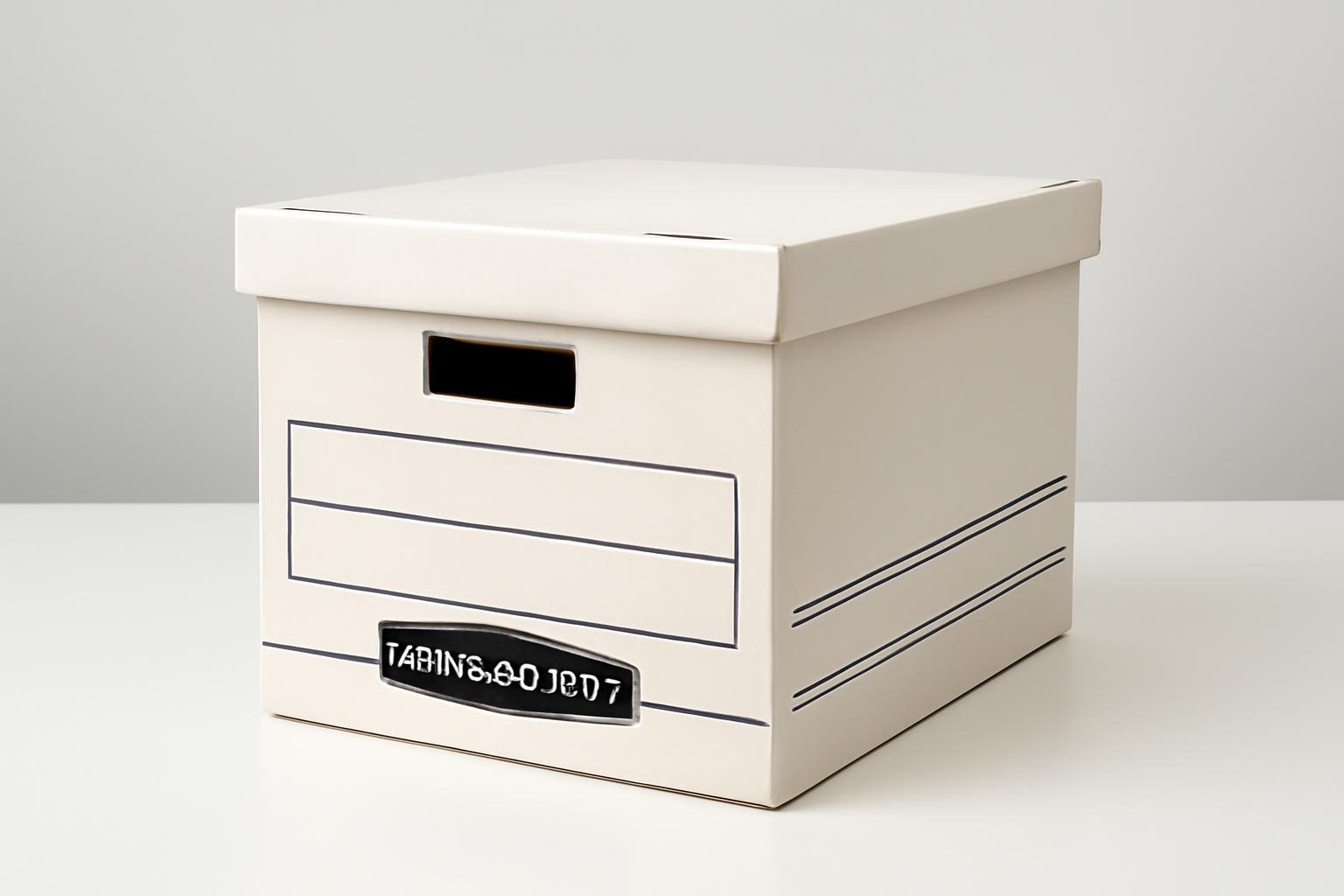
Bankers Box Dimensions and Size Guide
Overview
The commonly cited standard bankers box measures about 15 inches long, 12 inches wide, and 10 inches high — the size most sources treat as the default letter-file box. That figure appears consistently across dimension guides, including Citi Packaging and Print247, but exact measurements vary by manufacturer and model, so always verify the specific listing before you buy.
Beyond that quick answer, choosing well means matching three things: the paper size you store (letter, legal, A4, or A5), the space the box must fit (shelf, cabinet, closet, or truck), and how often you need to open it. This guide covers typical dimensions by category, explains the difference between internal and external measurements, and ends with a scenario-based decision matrix. Because published dimensions differ from source to source, treat every number here as typical rather than universal.
Common Bankers Box Dimensions by Size
Most banker-style boxes fall into a handful of recognizable size categories, and the fastest way to compare them is side by side. The table below compiles typical dimensions reported across dimension guides; where sources disagree, the range or the most commonly cited figure is shown. Dimensions are listed as length × width × height in inches unless noted.
| Box type | Typical dimensions (L × W × H) | Common use | Source note |
|---|---|---|---|
| Standard / letter | 15 × 12 × 10 in | Letter-size (8.5 × 11 in) files | Widely cited, e.g. Legal Shred |
| Standard legal | 15.25 × 12.25 × 10.75 in | Legal-size (8.5 × 14 in) files | Legal Shred size chart |
| Legal “long” | ~24 × 15 × 10 in | Legal folders lengthwise | Cited around 24.13 × 15.13 × 10.38 in by Print247 |
| Letter/legal combo | 16.25 × 12.5 × 10.5 in | Mixed letter and legal files | Legal Shred size chart |
| Small (half-size) | 12.5 × 8 × 10 in | Personal files, small archives | Legal Shred size chart |
| Medium | 16–18 in long | Larger general storage | Range per Citi Packaging |
| Large / heavy-duty | 17 × 12.5 × 10.5 in | Oversized or heavy files | Legal Shred size chart |
| Binder box | 12.75 × 25.5 × 16.5 in | Ring binders | Listed by BoxesGen |
Use this chart as a starting point, not a specification sheet. The same category name can carry different measurements at different sellers, and some listings report internal dimensions while others report external ones — a distinction covered in the next major section.
Standard and letter-size boxes
If you need one number to remember, it is 15 × 12 × 10 inches — the size most guides call the standard bankers box. OxoPackaging lists the same standard size with metric equivalents of 38 cm × 30.4 cm × 25.4 cm, or 380 mm × 304 mm × 254 mm, and describes it as used across businesses and manufacturers. This size exists to hold letter-size (8.5 × 11 in) documents in folders with a little clearance for fingers and file tabs.
That said, “standard” is a convention, not a certified specification. Individual products can run a quarter inch or more larger or smaller, so confirm the listed dimensions on the exact model before committing to a shelving plan.
Legal and letter/legal boxes
Legal files (8.5 × 14 in) are three inches longer than letter files, and box makers handle that in two different ways. Some sources describe a slightly enlarged legal box — Legal Shred lists a standard legal box at 15.25 × 12.25 × 10.75 inches — while others describe a much longer format: Print247 cites legal boxes at approximately 24.13 × 15.13 × 10.38 inches and notes they need deeper shelves. Citi Packaging describes legal boxes sharing the 15 × 12 in footprint but standing 10–12 inches tall.
There is also a letter/legal combo format, cited around 16.25 × 12.5 × 10.5 inches, designed to take both paper sizes in one box. The practical takeaway: “legal size” on a listing can mean very different footprints, so check the actual length figure, not just the label.
Small, medium, large, and specialty boxes
Beyond the standard and legal formats, listings commonly include several other categories worth recognizing. Small or half-size boxes run around 12.5 × 8 × 10 inches per Legal Shred and suit personal files or partial archives. Medium boxes stretch roughly 16–18 inches long according to Citi Packaging, while large or heavy-duty boxes are cited around 17 × 12.5 × 10.5 inches for oversized files.
Specialty formats add further variety: BoxesGen lists binder boxes at 12.75 × 25.5 × 16.5 inches and also covers sliding-style boxes, while other guides mention magazine and drawer-style formats. Treat these as categories you may encounter rather than fixed standards — specialty dimensions vary more between sellers than the core letter and legal sizes do, so verification matters even more here.
Internal vs. External Dimensions
The single most common source of confusion in bankers box shopping is whether a listed measurement is internal or external — and the two answer different questions. As the Bankers Box US size guide puts it, interior dimensions determine capacity, while exterior dimensions determine fit on shelves.
The difference is small but meaningful. That same guide lists the standard letter/legal file box with typical interior dimensions of 15 × 12 × 10 inches and typical exterior dimensions of 15.5 × 12.5 × 10.5 inches — about half an inch added per axis by wall thickness and the lid. DreamCustomBoxes similarly frames the common standard measurement — 10 inches high × 12 inches wide × 15 inches deep — as an internal dimension.
Which one you need depends on your task:
- Estimating file capacity: use interior dimensions, because folders and hanging files must fit inside the usable space.
- Planning shelf, cabinet, or closet fit: use exterior dimensions, including lid overhang, because that is the space the box actually occupies.
A box that “should” fit a 15.25-inch-deep shelf based on its interior spec can fail on the exterior measurement. Before buying, confirm which figure the listing reports — many listings do not say — and if only one is given, assume you need to add clearance for shelf planning or subtract wall thickness for capacity planning.
Paper Compatibility: Letter, Legal, A4, and A5
The right box size follows directly from the paper you store, so start there. For letter-size paper (8.5 × 11 in), the standard 15 × 12 × 10 in box is the default answer: letter folders sit sideways across the 12-inch width with room to flip through them, per the Bankers Box US guide.
Legal-size paper (8.5 × 14 in) is where fit problems happen. In a standard box, legal folders typically sit diagonally rather than flat, which works for occasional storage but makes browsing awkward. If your files are predominantly legal-size, a legal “long” box — cited around 24 × 15 × 10 inches interior — holds legal folders lengthwise and is described as best for law and finance records. Print247 confirms these longer legal boxes need deeper shelves, so check storage depth before choosing them.
For mixed collections, the letter/legal combo format (around 16.25 × 12.5 × 10.5 in per Legal Shred) accommodates both sizes in one box, which simplifies purchasing when a department stores both formats. The tradeoff is slightly less efficient use of space when a box holds only letter files.
The rule of thumb: match the box’s longest interior dimension to your longest document plus folder clearance, and never assume a “standard” box handles legal files comfortably just because they physically fit.
A4 and A5 paper sizes
If you work with international paper formats, A4 and A5 boxes exist as their own categories. OxoPackaging’s dimension guide lists dedicated sections for A4 and A5 bankers boxes alongside letter and legal formats, which reflects how sellers group these products.
A4 paper is slightly taller and narrower than US letter, so an A4 document can sit tight or protrude in a box sized strictly for letter files. The supplied guides treat A4 and A5 boxes as common categories rather than publishing one universal dimension set, so the practical step is the same as elsewhere: check the listed internal dimensions against your paper format — with folders included — before ordering, especially when buying from a seller in a different region.
Capacity, Weight, and Stackability
How much a bankers box holds depends on more than its dimensions, and published estimates vary widely. Legal Shred states the standard letter-size box (15 × 12 × 10 in) holds about 2,500 sheets of paper, or 5 reams. By contrast, MyBoxPrinter says letter/legal boxes can internally store anywhere from 6,000 to 8,000 sheets depending on paper weight and type, and normally hold 12 to 15 file folders comfortably. The gap between those figures is a useful warning: capacity claims are context-dependent, not interchangeable.
Several variables explain why estimates differ so much:
- Paper weight and type — heavier stock takes more space per sheet.
- Folders and hanging files — file hardware consumes interior volume that raw sheet counts ignore.
- Interior vs. exterior measurement — capacity math only works from usable interior dimensions.
- Packing density — archive boxes packed for retrieval hold fewer files than boxes packed solid.
Weight is the constraint people underestimate. Paper is dense: a fully packed standard box is heavy enough that lifting, carrying, and stacking all become concerns, which is why loose sheet-count maximums should not drive packing decisions on their own. The supplied guides discuss stackability and weight control as selection factors — the Bankers Box US guide notes the classic archive box is stackable with its lid — but none publish universal load ratings or safe stacking heights, and this article will not invent them.
The bounded guidance is this: pack heavy-paper boxes below their volumetric maximum if people will carry them, keep heavier boxes at the bottom of any stack, and check the specific manufacturer’s stated weight and stacking limits for the model you buy. If the listing gives no limit, treat that as missing information rather than permission.
Materials and Duty Levels
Duty level is the second axis of bankers box selection after size, and it describes construction strength rather than dimensions. Guides such as OxoPackaging group boxes into basic-duty and heavy-duty categories; other sources add a medium-duty tier between them. As a reference point, OxoPackaging lists standard basic-duty boxes at 41.3 cm long, 31.8 cm wide, and 26.7 cm high externally — a reminder that duty level and listed size interact, since wall thickness affects both.
Material terms map loosely onto those duty levels. Basic-duty boxes are typically lighter kraft or cardboard construction suited to lighter loads and less handling. Heavier-duty boxes use corrugated cardboard, and the wall construction matters: single-wall corrugated has one fluted layer, while double-wall adds a second, producing a stiffer box that better tolerates weight, stacking, and repeated handling.
The practical mapping is straightforward even without published load numbers. If boxes will be packed once, shelved, and rarely touched, basic-duty construction usually suffices and costs less shelf-height per box. If boxes will be moved between sites, stacked several high, or opened frequently, stepping up to double-wall or heavy-duty construction reduces the risk of crushed corners and failed handles. Because the supplied sources describe duty levels conceptually without quantified ratings, confirm the specific model’s construction — single-wall versus double-wall, and any stated weight capacity — on the product listing rather than relying on the duty label alone.
Choosing the Right Bankers Box for Your Use Case
Dimensions only become useful when they connect to a decision, so this section translates the size categories above into scenario-based choices. The matrix maps common storage situations to the box category most guides point toward, along with the measurement you should verify before ordering. All dimensions remain typical figures — confirm the exact model’s specifications.
| Your scenario | Likely box category | Key measurement to verify | Why |
|---|---|---|---|
| Letter files, general archive | Standard letter (~15 × 12 × 10 in) | Interior width for folders | Letter folders sit sideways with browsing clearance (Bankers Box US) |
| Legal files, primary format | Legal “long” (~24 × 15 × 10 in) | Shelf depth vs. exterior length | Holds legal folders lengthwise; needs deeper shelves (Print247) |
| Mixed letter and legal files | Letter/legal combo (~16.25 × 12.5 × 10.5 in) | Interior length | One box handles both formats |
| Frequent access to active files | Drawer- or sliding-style box | Front clearance to open | Access without unstacking; styles listed by BoxesGen |
| Tight shelf or closet storage | Small/half-size (~12.5 × 8 × 10 in) | Exterior dimensions incl. lid | Fits narrow spaces; lighter when full |
| Office move with heavy files | Heavy-duty (~17 × 12.5 × 10.5 in) | Construction and any stated load limit | Stronger walls for transport and stacking |
| Binders rather than files | Binder box (~12.75 × 25.5 × 16.5 in) | Interior height vs. binder spine | Sized for ring binders, not folders |
Two patterns are worth calling out. First, access frequency changes the right style more than the right size: a lift-off-lid archive box is fine for records touched once a year, while drawer- or sliding-style boxes suit files retrieved weekly because they open without dismantling a stack. Second, when a scenario is split — say, mostly letter files with an occasional legal folder — the combo box is usually the safer buy than forcing legal files diagonally into standard boxes long-term.
Whatever the matrix suggests, the final check is always the same: pull up the specific product’s listed interior and exterior dimensions and compare them against your paper, your shelves, and your handling plan.
Shelf, cabinet, and moving fit checks
Before ordering boxes in quantity, measure the space they must occupy — exterior dimensions, not interior ones, determine fit, per the Bankers Box US guide. A standard box with a 15 × 12 × 10 in interior can occupy roughly 15.5 × 12.5 × 10.5 inches externally once walls and lid are counted.
Run these quick checks:
- Shelf depth and width against the box’s exterior length and width, with a little clearance to slide boxes in and out.
- Vertical clearance between shelves, including lid height and room to lift the lid if boxes are accessed in place.
- Doorways and carrying paths for moves — longer legal boxes are notably harder to carry through tight corridors.
If any measurement is within half an inch of the box’s exterior spec, treat it as a fail and pick a smaller format or a different shelf. Clearance you cannot use is cheaper than boxes you cannot fit.
Buying checks: labeling, durability, and bulk needs
Once size and fit are settled, a few secondary checks prevent regret at volume. Guides like DreamCustomBoxes emphasize that knowing precise dimensions and types is what makes a filing or storage system work — and that logic extends to the rest of the purchase.
Before ordering, confirm:
- Labeling surface: the end panel facing outward on your shelves should have room for a legible label or index card.
- Access frequency match: lift-off lids for archives, drawer or sliding styles for active files.
- Duty level vs. real handling: heavy-duty construction only pays off if boxes will actually be moved or stacked high.
- Consistency across the order: buying one model in bulk keeps stacks stable and shelf math simple; mixing sizes complicates both.
- Listed specifications: interior and exterior dimensions, construction type, and any stated load limit for the exact SKU.
A ten-minute verification pass on one sample box — measure it, pack it, shelve it — is the cheapest insurance before a bulk order.
Long-term archive and preservation caveats
If your files carry preservation or compliance requirements, dimensions are not enough to decide. Claims such as acid-free materials, moisture resistance, recycled content, or suitability for specific records-retention schedules vary by product and are not verified by general size guides, including this one. Before committing important records to any box, check the manufacturer’s product documentation for the specific model and, where retention rules apply, review your organization’s records policy or consult whoever owns compliance for those documents. Standard cardboard file boxes are storage containers, not preservation environments, and environmental factors like humidity affect both the documents and the box’s strength over time. When preservation genuinely matters, verify the claims in writing rather than inferring them from a category name.
Terminology and Variation to Verify Before Buying
The final thing to understand is why the numbers in this guide come with so many “approximately” qualifiers: bankers box terminology is not standardized across sellers. “Bankers box” is used generically for lidded file-storage boxes across the market, and different guides organize the category differently — BoxesGen lists standard, legal, medium, small, and sliding boxes, while OxoPackaging organizes by standard, legal, letter, A4, A5, basic-duty, and heavy-duty categories. The same label can mean different measurements at different sellers.
Dimension order adds another trap. OxoPackaging defines the convention as length × width × depth/height, but not every listing follows it, and a 15 × 12 × 10 box reads very differently if the seller has listed height first. When a listing’s numbers seem off for the category, check whether the order — or the internal/external basis — explains it.
Style names vary too: lift-off-lid, drawer-style, and sliding boxes all store files but behave differently in daily use, and specialty formats like binder or magazine boxes borrow the “bankers box” name with entirely different proportions. The dependable habit is simple. Treat category names and typical dimensions as a shortlist tool, then verify four things on the exact product before buying: the listed dimensions and their order, whether they are interior or exterior, the construction and duty level, and any stated weight or stacking limits. Five minutes of verification protects an entire shelving plan.