
What a Roof Rat Infestation Can Actually Put at Risk
Contamination and wiring damage are practical risks. Keep children and pets away, and don't vacuum or dry sweep loose droppings.
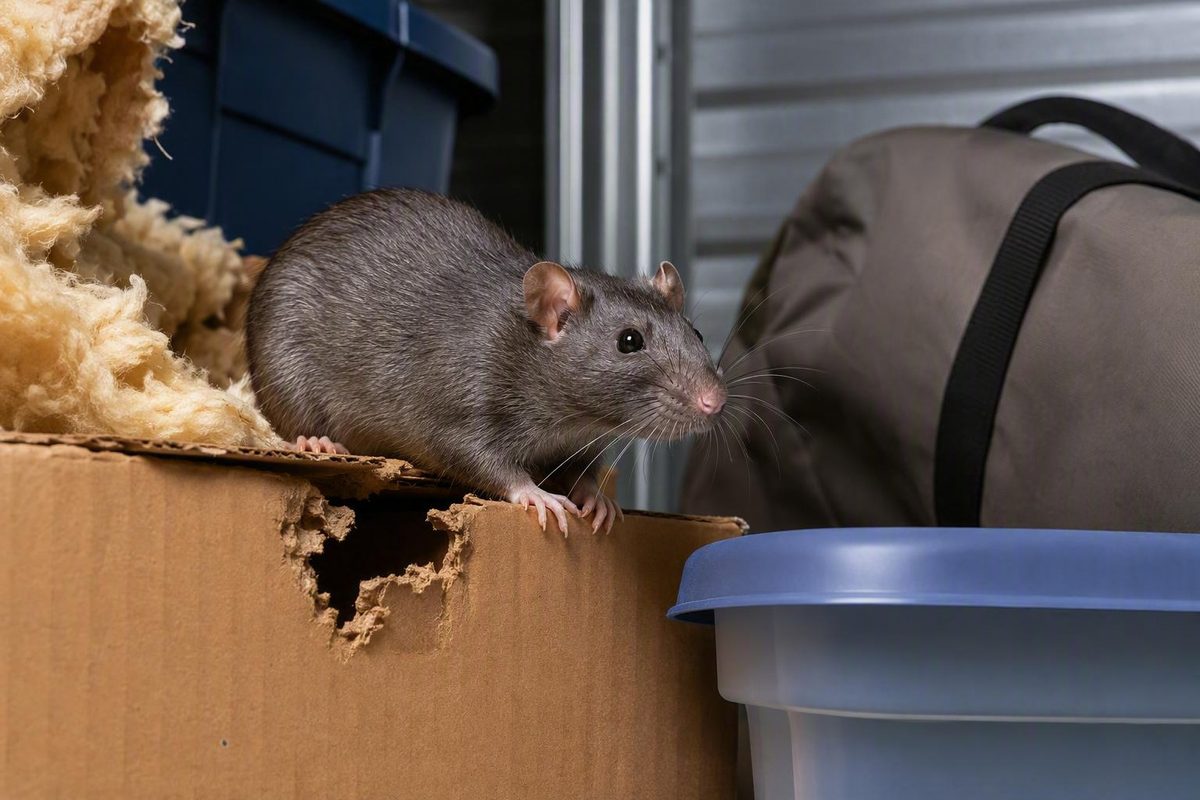
Roof rats can create genuine sanitation and property hazards, especially when they contaminate food or stored belongings, nest in insulation, or gnaw electrical wiring. But finding a rat, dropping, or chewed package does not mean that illness, a bite, a fire, or major building damage is inevitable.
The practical response is to reduce exposure, inspect the elevated areas roof rats favor, and separate the work into distinct problems. Removing the animals is one task; evaluating contaminated materials, repairing damaged utilities, and preventing reentry are others.
The short answer: roof rats are hazardous, but the risks are not all equal
Are roof rats dangerous? Potentially, yes—but the evidence usually calls for measured action rather than panic.
The most immediate and practical concerns are:
- Contaminated food, surfaces, and belongings. Droppings, urine, nesting debris, and gnawed packaging create sanitation concerns.
- Gnawing and property damage. Roof rats may damage wiring, insulation, packaging, wood, drywall, plastic, and other materials.
- Parasites and defensive bites or scratches. These are possible, particularly when someone handles or corners a rat.
- Specific diseases, including rare or regional concerns. These require careful context. A rat’s presence alone does not prove that it carries or has transmitted a particular pathogen.
Roof rats can contaminate food and storage areas with urine and droppings and may gnaw wiring and building materials, according to a roof-rat overview from Terminix. That establishes possible hazards, not the probability that a particular household will experience infection, a bite, a fire, or serious building damage. The available evidence does not provide reliable rates for those outcomes.
That distinction is important. Droppings beside a bag of pet food indicate a sanitation problem; they do not prove that anyone has become ill. Gnaw marks on a cable justify restricting access and arranging an appropriate assessment; they do not establish that a fire is imminent.
If you have just found evidence of rats:
- Keep children and pets away from the affected area.
- Do not handle a live, trapped, injured, or dead rat with bare hands.
- Isolate food, pet food, toys, and belongings that may have been contaminated.
- Do not consume food from visibly gnawed, soiled, or otherwise compromised packaging.
- Look for visible damage to wiring, pipes, vents, insulation, and stored property without touching exposed electrical components.
- Note whether signs appear isolated, widespread, fresh, or recurring.
- Seek qualified help when activity is inaccessible, contamination is substantial, utilities are damaged, or a person or animal has been injured.
Roof rats should not be ignored. Their concealed habits can allow contamination and damage to accumulate before the animals themselves are seen.
Why roof rats are often found above living and storage areas
The roof rat is Rattus rattus, also commonly called the black rat or ship rat. It is a nocturnal, agile climber associated with elevated and concealed parts of buildings.
Likely shelter or activity areas include:
- Attics and rafters
- Spaces above ceilings
- Wall cavities
- Eaves and soffits
- Roof and gable vents
- Garages and storage sheds
- Cabinets and enclosed shelving
- Dense vegetation near buildings
- Concealed areas around ductwork or utilities
Trees, fences, vines, rough exterior surfaces, and overhead utility routes may give roof rats access to a structure. The University of Arizona Cooperative Extension describes roof rats as agile climbers capable of using trees, rough vertical surfaces, and overhead utility lines, while making clear that its prevalence observations concern parts of Arizona in its identification and prevention handout.
Once near a roofline, a rat may investigate damaged vent screens, gaps around siding, openings at eaves, or spaces around pipes and cables. An inspection limited to the foundation can therefore miss the relevant route.
Roof rats’ nighttime activity and concealed sheltering also help explain delayed detection. People may hear movement above a ceiling, notice damaged packaging, smell a persistent odor, or find droppings before seeing an animal.
Do not rely on one advertised minimum entry-hole measurement. The supplied sources compare possible openings with different coins or recommend attention at different gap sizes.
Instead, inspect all plausible openings, especially around:
- Roof edges and intersections
- Eaves, soffits, and fascia
- Roof, attic, and gable vents
- Damaged screens
- Loose siding or trim
- Utility and cable penetrations
- Gaps around pipes and ductwork
- Garage-door edges
- Joints where additions or different materials meet
Regional context matters. Climate, roof-rat prevalence, vegetation, and outdoor sources of food and water vary. Guidance about backyard citrus or desert water sources may be relevant in parts of Arizona, for example, but should not be generalized to every infestation.
Health risks come mainly from contamination, not attacks
A roof rat may cross food-preparation areas, enter stored goods, damage packaging, or leave urine and droppings around feeding and nesting sites. Potentially affected items and areas include:
- Exposed human food
- Pet food, birdseed, and animal treats
- Shelves, counters, floors, and storage bins
- Cooking or serving equipment
- Cardboard boxes and packaged goods
- Attic insulation and nesting areas
- Toys and belongings stored near walls or concealed travel routes
Several commercial pest-control sources associate roof rats with possible salmonellosis, leptospirosis, and rat-bite fever. They describe contaminated food or water as a possible route for salmonellosis and direct injury as a possible route for rat-bite fever. These sources do not establish household incidence, prove that every roof rat carries those pathogens, or provide a medical protocol for evaluating exposure.
The appropriate practical lesson is narrower: prevent contact with rodent waste, do not eat compromised food, and obtain individualized professional advice after an injury or concerning illness rather than attempting to diagnose a rodent-associated disease from an infestation sign.
Food should not be assumed safe merely because a gnaw mark is small. Damage can expose the contents, and contamination may not be visible. Set affected food apart from intact supplies so that it is not accidentally used. Apply the same caution to pet food, treats, and other consumable products.
Plague should not be portrayed as a routine household consequence of finding a roof rat. One Phoenix-area pest-control source characterizes plague contact among suburban roof rats there as highly unlikely, while noting that disease ecology depends on location and flea exposure. Historical associations do not establish the risk posed by a particular animal in a present-day building.
Claims about hantavirus also require restraint. The supplied commercial sources conflict: one raises a qualified concern about disturbing rodent waste in some settings, while another states that roof rats had not been connected to hantavirus pulmonary syndrome. That evidence is insufficient to characterize roof rats as a confirmed universal source. It does reinforce a simpler rule: avoid stirring loose rodent waste, particularly when the rodent species is uncertain.
Rats may also carry fleas or mites, but finding a rat does not prove that parasite transmission has occurred. If a person or pet develops concerning symptoms after possible exposure, seek advice from an appropriate medical or veterinary professional rather than diagnosing the cause from the infestation alone.
Bites, children, pets, and parasites: possible but context-dependent risks
Roof rats generally avoid people. They are not ordinarily described as animals that seek human confrontation, although a cornered, trapped, injured, handled, or threatened rat may bite or scratch defensively.
Situations that increase the chance of direct contact include:
- Reaching into a nest or concealed cavity
- Picking up a live or injured rat
- Handling an occupied trap
- Attempting to catch a rat by hand
- Allowing a pet to corner one
- Moving stored items without checking the hidden space behind them
Do not handle a live, trapped, injured, or dead rat with bare hands. Keep children and pets away from traps, bait, carcasses, nesting material, droppings, and visibly contaminated areas.
A child may touch a soiled floor or object. A pet may investigate droppings, damaged pet-food packaging, a trap, or a rat concealed behind stored property. Fleas or mites may also be present. Commercial guidance identifies these as possible concerns but does not quantify whether children or pets face greater risk than other household members.
The evidence available here does not support a detailed first-aid, poisoning, or symptom-based treatment protocol.
The safest behavioral rule is straightforward: do not attempt bare-handed capture or corner the animal. If a rat is trapped somewhere that cannot be managed without direct contact, use qualified pest-control assistance.
Gnawing can turn an infestation into an electrical or property problem
Roof rats may gnaw or disturb a wide range of materials, including:
- Electrical wiring and cable coverings
- Insulation
- Wood and trim
- Drywall
- Plastic containers and packaging
- Cardboard boxes
- Food packages
- Pipes or flexible lines
- Soffits and eaves
- Paper and cloth used for nests
Severity varies considerably. One infestation may produce superficial damage to a box; another may involve contaminated insulation and several damaged cables. The evidence does not justify assuming that roof rats routinely compromise major structural components, but visible damage should be evaluated according to the material involved.
Electrical wiring deserves particular caution. Chewed insulation around conductors can create electrical faults and a potential fire hazard, although the available sources do not establish how often rat damage results in a fire. Critter Control identifies damaged wiring as a safety concern alongside gnawed insulation and building materials in its guide to roof-rat signs and damage.
If wiring appears damaged, do not touch exposed conductors. Restrict access and obtain an assessment from a qualified electrician or relevant utility professional. Pest removal does not repair damaged wiring or establish that electrical equipment is safe.
The same distinction applies elsewhere. Removing the rats does not clean contaminated insulation, restore a gnawed pipe, or make torn food packaging usable. Pest control, repair, and contamination assessment may overlap, but they are not interchangeable.
Storage areas create additional complications:
- Cardboard boxes can be gnawed and may conceal nesting material.
- Packaged goods may be contaminated even when most of the package looks intact.
- Textiles and upholstered items can collect droppings, urine, hair, debris, and odor.
- Paper records may be difficult to assess if contamination has penetrated stacked or enclosed material.
- Electrical items may have damaged cords or contamination inside inaccessible housings.
- Plastic containers may be gnawed even when they contain no food.
Use these distinctions only for triage. They do not establish that a particular item is cleanable, salvageable, or safe to reuse. Isolate visibly affected belongings until their material, condition, and degree of contamination can be assessed.
There is no supported universal rule requiring every potentially exposed belonging to be discarded. Decisions depend on the material, extent of visible contamination, ability to evaluate inaccessible layers, and the type and value of the item.
Signs that justify a closer inspection
Repeated fresh signs, evidence in multiple locations, or a combination of noises, waste, and new damage provides a stronger reason to investigate.
Use the following checklist to connect each sign with its practical implication:
- Scratching, squeaking, or scampering at night: Inspect attics, spaces above ceilings, wall cavities, and possible roofline access routes.
- Droppings: Restrict access and check nearby food, stored goods, and concealed travel paths.
- Gnaw marks: Identify the damaged material. Wiring and utility components require more caution than an empty cardboard box.
- Grease or rub trails: Follow possible routes along walls, beams, pipes, eaves, or concealed openings.
- Nesting material: Look for shredded paper, cloth, insulation, or other soft material in secluded areas.
- Damaged food packaging: Isolate the affected product and inspect adjacent supplies and shelves.
- Urine staining: Treat the location as potentially contaminated and check for nearby shelter or feeding sites.
- Musky or persistent odor: Investigate for accumulated waste, contaminated insulation, or a concealed carcass.
- Unusual pet attention: Inspect the wall, ceiling, cabinet, or stored belongings the animal repeatedly watches.
Priority locations include attics, rafters, ceiling voids, wall cavities, eaves, garages, roof vents, branches near a structure, fences, vines, utility routes, and penetrations for pipes, cables, or ducts.
Use caution in unfinished attics. Poor footing, exposed wiring, low headroom, and concealed structural edges may present hazards independent of the rats. If the area cannot be inspected safely, stop and use qualified help.
Do not identify the species from one dropping, one noise, or an estimated body size. Published descriptions of dropping shape and physical dimensions differ, and similar evidence may come from other rodents. Scratching can come from another animal, while a persistent odor may indicate a carcass rather than active rats.
Stronger evidence of current activity includes:
- New droppings appearing after an area has been cleared
- Repeated nighttime movement along the same ceiling or wall
- Multiple newly damaged packages
- Fresh gnawing around a vent or utility opening
- Nesting debris combined with tracks or rub marks
- Related signs in an attic and an attached garage
Document what you find with photographs, dates, locations, and notes about when noises occur. Documentation is also useful when the problem affects a rental property or self-storage facility.
What to do immediately after finding droppings, damage, or a rat
Start with exposure control rather than moving boxes, sweeping waste, or chasing the animal.
A sensible first response is:
- Keep people and pets away. Restrict access if possible.
- Avoid direct contact. Do not pick up the rat, nest, trap, or droppings with bare hands.
- Isolate possibly contaminated items. Separate affected food, pet supplies, toys, textiles, and stored goods from clean property.
- Look for utility damage without touching it. Note visible damage to wiring, pipes, vents, or equipment.
- Document the evidence. Photograph waste, gnaw marks, damaged packaging, stains, and possible entry points.
- Assess the apparent extent. Determine whether the evidence is limited and accessible or widespread, recurring, or hidden in an attic or wall.
- Match the response to the hazard. Pest removal, contamination assessment, medical care, electrical work, and building repair may require different professionals.
Do not dry sweep or vacuum loose droppings or nesting material. Commercial cleanup guidance advises against those actions because they can disturb contaminated material in its discussion of roof-rat precautions.
The available evidence is not sufficient to present a complete public-health cleanup procedure. Requirements may differ according to the amount of waste, ventilation, location, affected materials, and uncertainty about the rodent species. Before disturbing an affected area, consult current public-health guidance applicable to your location and circumstances.
Professional or public-health advice is particularly appropriate for:
- Extensive attic contamination
- Heavily soiled insulation
- Widespread nesting material
- Waste in poorly ventilated or inaccessible spaces
- A concealed or decomposing carcass
- Contamination involving ventilation or duct areas
- Situations in which suitable protective measures are uncertain
For belongings, distinguish between materials only to organize the assessment. A smooth hard item, a mattress, a box of records, an appliance, and a package of food present different evaluation problems. Do not assume that a porous item can be cleaned effectively or that a hard item is safe merely because contamination is not obvious.
Do not consume food, pet food, or other consumable products from visibly gnawed or soiled packaging.
If the problem is in a self-storage unit:
- Photograph the signs and affected property before moving items.
- Record the unit location and date.
- Notify the facility operator promptly about visible pest activity or building damage.
- Ask how the facility wants the issue documented and whether connected building areas will be inspected.
- Review your lease and insurance documents rather than assuming who is legally or financially responsible.
- Avoid transferring rats, nesting material, or contaminated boxes into a vehicle or another storage space.
Escalate according to the problem:
- A bite, scratch, or concerning illness after exposure: Medical professional
- Pet injury, illness, or possible bait contact: Veterinarian
- Persistent or inaccessible rat activity: Pest-control professional
- Large or difficult-to-assess contaminated area: Qualified remediation provider or local public-health guidance
- Visible wiring or utility damage: Electrician or relevant trade professional
- Damaged eaves, vents, or roof components: Appropriate building or roofing professional
Long-term control requires removal, sanitation, and exclusion
Removing one rat is not the same as controlling an infestation. Long-term control requires addressing both the animals and the conditions that support them: food, water, shelter, travel routes, and structural openings.
Begin with sanitation and habitat reduction:
- Store human and pet food in secure, durable containers.
- Keep trash and recycling containers closed.
- Clean food residue from floors and shelves.
- Remove fallen fruit or nuts.
- Avoid leaving pet food accessible overnight.
- Address leaks and standing water.
- Reduce dense vegetation against walls, roofs, and fences.
- Trim branches away from rooflines and exterior walls.
- Reduce unnecessary clutter in garages, attics, and storage areas.
- Inspect elevated routes as well as ground-level access.
Fruit-tree removal by itself is not a complete remedy. University of Arizona Cooperative Extension guidance states that removing fruit or nut trees will not eliminate an established population or prevent new rats from arriving. Removing fallen produce and limiting access are more proportionate measures than assuming the entire tree must be removed.
Inspect and seal plausible structural openings, but coordinate exclusion with removal. If you cannot determine whether rats remain inside, obtain qualified assistance before completing exclusion work.
Trapping can be part of control. Because roof rats often use elevated routes, signs on rafters, beams, ledges, or wall tops may be more informative than activity in open floor space. Traps must not be accessible to children, pets, or other animals. If safe use is uncertain, do not improvise.
Poison presents tradeoffs. A poisoned rat may die in an inaccessible wall or ceiling and produce a persistent odor. Baits can also expose children, pets, wildlife, or animals that scavenge poisoned rodents. Any pesticide use must follow its product label. The Internet Center for Wildlife Damage Management emphasizes sanitation, habitat reduction, exclusion, and population control rather than reliance on one method in its roof-rat management guidance.
Do not rely on ultrasonic devices or repellents as substitutes for sanitation, trapping, monitoring, and exclusion. The same wildlife-management resource states that ultrasonic devices have not been proven to control rats and that repellents are not effective. Predator-shaped ornaments are not a solution, and cats, owls, and other predators generally have little effect on an established population.
Monitor after the apparent removal. Check whether fresh droppings, noises, gnawing, food damage, or odors return. Reinspect repaired vents and sealed penetrations, particularly where branches, fences, vines, or utilities approach the building.
Qualified help is reasonable when:
- Signs persist despite basic sanitation and control efforts.
- Rats are active in inaccessible walls, ceilings, or roof spaces.
- Safe trap placement is not possible.
- Entry routes cannot be identified.
- Activity returns after repairs or exclusion.
- Contamination is substantial.
- Insulation or stored belongings are heavily soiled.
- A concealed carcass is creating persistent odor.
- Wiring, pipes, ductwork, or building components are damaged.
- You cannot determine whether animals remain inside before sealing openings.
Roof rats should not be ignored because contamination and gnawing can create real sanitation and property problems. Severe outcomes are not automatic, however. Reduce exposure first, inspect elevated areas, treat damaged wiring and extensive contamination as separate safety issues, and combine removal with sanitation, monitoring, and carefully coordinated exclusion.
Are roof rats likely to attack or bite people?
Roof rats generally avoid people and are unlikely to attack without provocation. A cornered, trapped, injured, handled, or threatened rat may bite or scratch defensively.
Do not attempt to catch one by hand or reach into a nest or occupied trap. A bite or scratch does not prove that an infection has been transmitted, but it warrants prompt advice from a medical professional.
What diseases are associated with roof rats?
Commercial pest-control sources associate roof rats with possible salmonellosis, leptospirosis, and rat-bite fever and describe contaminated food, rodent waste, bites, scratches, and parasites as possible exposure routes. Those sources do not establish how often illness results from a household infestation or prove that every roof rat carries a pathogen.
Plague should not be treated as a routine household consequence, and the supplied evidence does not support characterizing roof rats as a confirmed universal source of hantavirus pulmonary syndrome. Seek individualized medical advice after direct injury or concerning illness rather than attempting to diagnose a disease from infestation signs.
Can roof rats chewing wires cause a house fire?
Chewed wire insulation can create an electrical fault and potential fire hazard, but the available evidence does not establish how often roof-rat damage causes a house fire.
Do not touch exposed conductors. Restrict access and obtain an assessment from a qualified electrician or relevant utility professional. Removing the rats does not repair or certify damaged wiring.
Can I vacuum roof-rat droppings?
Do not vacuum or dry sweep loose droppings or nesting material. Those actions can disturb contaminated material.
Because the available source material does not establish a complete cleanup protocol for every setting, consult current local public-health guidance before cleanup. Use qualified remediation help for extensive contamination, heavily soiled insulation, inaccessible waste, or a confined and poorly ventilated area.
Do ultrasonic repellents or cats get rid of roof rats?
Neither should be relied upon to eliminate an established infestation. Ultrasonic devices have not been proven effective for rat control, and cats, owls, and other predators generally have little effect on an established roof-rat population.
Effective long-term control combines food and water reduction, sanitation, monitoring, population control, vegetation management, and structural exclusion coordinated so that active animals are not left inside.