
Choose a Home Jewelry Safe by Risk, Ratings, and Real-World Fit
For a modest collection, SentrySafe SFW123GDC has the strongest budget evidence, but its small capacity and failed water test matter.
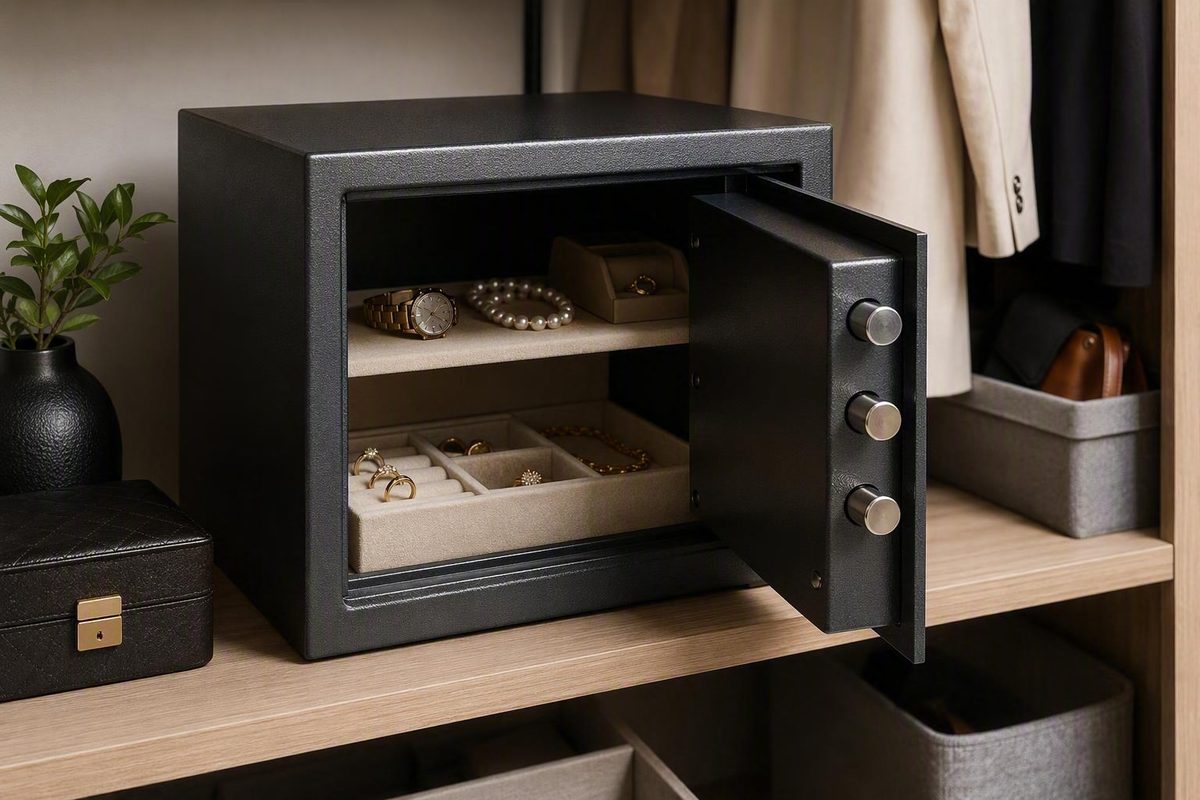
No supplied evidence establishes one jewelry safe as best for every home, collection, budget, and threat profile. A compact general-purpose safe may suit a modest collection worn frequently but be inappropriate for valuable heirlooms, numerous watches, an upper-floor installation, or an insurance policy that requires a particular burglary classification.
Start with five questions:
- What would the collection cost to replace, and which pieces are genuinely irreplaceable?
- How often do you need access?
- Is theft, fire, water, or environmental exposure the primary concern?
- What can the intended room, access route, and anchoring surface accommodate?
- Does your insurer require a particular safe classification, lock, alarm, or installation method?
Within the supplied evidence, the SentrySafe SFW123GDC has the strongest practical comparative support at the budget end. That does not make it a universal winner or a substitute for a model-specific, independently classified commercial safe. AMSEC, TigerKing, Brown Safe, and Casoro offer other shopping paths for buyers who need more capacity, jewelry-specific organization, or custom interiors, but their relevant ratings and configurations require closer verification.
How this guide evaluates evidence: The publisher did not independently test these safes. Two different forms of evidence are considered without treating one as a substitute for the other:
- Standardized, model-specific validation can establish that a particular configuration meets the named classification under defined conditions.
- Practical comparative testing can reveal how products performed under one reviewer’s tools and methods, but it does not establish a standardized burglary, fire, or water classification.
Manufacturer specifications and retailer listings can help build a shortlist. They should not be treated as final proof when the underlying model-specific record is unavailable. Prices are omitted because the supplied retail snapshots can change and do not establish total installed cost.
The short answer: the strongest picks by use case
This is a needs-based shortlist, not a numerical ranking. Its rows mix a tested budget safe, manufacturer-described products, retailer-listed models, luxury shopping paths, and a commercial-safe category. Their physical protection cannot be compared on a common scale from the available evidence.
| Use case | Model or family | Capacity | Protection evidence | Jewelry features | Installation considerations | Evidence type and confidence | Principal limitation |
|---|---|---|---|---|---|---|---|
| Modest collection and limited budget | SentrySafe SFW123GDC | 1.23 cu. ft. | Selected from 12 sub-$300 safes after editorial forced-entry, fire, and water testing; reportedly took 30 minutes to breach and protected contents in the reviewer’s fire test, but failed submersion | Locking drawer and LED light | 86 lb.; bolt-down hardware included | Practical comparative test; strongest-supported budget candidate | Small general-purpose safe; test pool excluded higher-security products Business Insider test |
| Compact jewelry-oriented storage | AMSEC JS2020 | Obtain usable interior measurements | Manufacturer reports a 45-minute ETL fire rating at 1,200°F; no burglary rating is established by the supplied evidence | Jewelry-oriented format; confirm the selected interior | 20 × 20 × 20 in.; 170 lb.; confirm anchoring and delivery requirements | Manufacturer-reported certification and specifications; moderate confidence for listed facts | Theft resistance cannot be ranked from the available information AMSEC guide |
| Combined burglary-and-fire shortlist | AMSEC BFS2815E1, BFS3416E1, BFS4520E1 | 3.8, 5.5, and 10 cu. ft. | Nationwide Safes advertises RSC burglary and one-hour fire ratings | Confirm trays, shelves, and selected configuration | Delivery complexity rises with size; obtain weights and anchoring instructions | Retailer-advertised ratings; unverified pending model-specific records | The collection page does not provide the complete certification documentation Nationwide Safes listing |
| Large organized collection | TigerKing SPARK5922 SE | 13.12 cu. ft., seller-listed | TigerKing states 40-minute fire protection at 1,200°F | Three drawers and shelves | 306 lb.; verify access route, anchoring, and floor suitability | Seller-stated specifications; low confidence for protection claims without test records | No burglary rating, construction detail, anchoring information, or independent test documentation supplied TigerKing collection |
| Luxury custom organization | Brown Safe Gem Series | Configuration-dependent | Brown Safe describes four protection levels and optional fire protection, but the supplied family page does not identify each configuration’s exact classification | Fabric-lined drawers, 18 insert layouts, necklace rack, mirror, lighting, and optional watch winders | Custom selections may alter dimensions, weight, delivery, and electrical needs | Manufacturer family-level information; configuration unverified | This is a shopping path rather than a documented model-level pick Brown Safe Gem Series |
| Custom or ready-to-ship luxury alternative | Casoro | Model-dependent | Casoro says its home jewelry safes carry a UL label and selected fire-resistant models have independent one- or two-hour verification | Lined drawers, necklace storage, lighting, finishes, file drawers, and optional watch winders | Consultation, delivery, and installation support are offered; obtain the scope in writing | Company-attributed claims; exact classification unavailable | Different models should not be assumed to have identical protection Casoro |
| Unusually valuable or irreplaceable collection | Verified TL-rated commercial-safe category | Varies | Requires an independently documented classification tied to the exact model and configuration | Jewelry inserts may be available separately | Delivery, anchoring, structural capacity, and insurer acceptance may control the decision | Potentially strong only when model-specific documentation is obtained | No particular TL-rated model was evaluated for this guide |
The SFW123GDC is the clearest budget recommendation because its practical performance was compared with other products in the same price-limited pool. It weighs 86 pounds and includes four one-inch bolts, a pry-resistant hinge bar, bolt-down hardware, a locking drawer, LED lighting, and code-plus-key entry. In the cited test, it took 30 minutes to breach, while every other safe subjected to the attack reportedly opened in under 10 minutes. Its contents also survived the reviewer’s extended fire exposure, but the safe failed water submersion.
Those results support calling it the best-supported budget candidate, not a demonstrated high-security solution for an exceptionally valuable collection. The test covered general home safes priced below $300 rather than dedicated jewelry safes or commercial burglary containers.
The AMSEC JS2020 serves a different buyer. American Security Products reports a quarter-inch plate door, a 170-pound weight, 20-inch dimensions in each direction, and a 45-minute ETL fire rating at 1,200°F. Because the supplied material does not identify a burglary rating, those specifications cannot establish that it resists theft better than the SentrySafe.
The BFS models are more promising when both burglary and fire claims matter, but their classifications are presented on a commercial retailer’s collection page. Ask the seller or manufacturer for records tied to the exact model, lock, and delivered configuration before relying on those claims.
Start with the collection and the threats, not the brand
A safe should follow the risk assessment rather than lead it. Before comparing finishes, locks, or drawer fabrics, create a private working inventory that covers:
- Approximate current replacement value
- Sentimental, unique, antique, or otherwise irreplaceable pieces
- Existing appraisals and their dates
- How often each group of pieces is worn
- Watches, documents, cash, or digital media that will share the safe
- Likely acquisitions over the next several years
- Existing alarms, cameras, access controls, and insurance arrangements
Do not adopt a retailer’s jewelry-value tier as an objective standard. Northwest Safe recommends considering a TL-rated commercial safe for property above its chosen threshold or for irreplaceable heirlooms, but that is seller guidance—not a universal insurance rule. Its broader advice to compare construction, fire insulation, lock type, organization, placement, and anchoring is more generally useful. Northwest Safe buying guide
For a valuable collection, contact the insurer before ordering. Ask whether coverage, limits, or premiums depend on:
- A specific burglary classification
- A separately listed lock
- A monitored alarm or alarm connection
- Current professional appraisals
- Floor or wall anchoring
- Professional delivery or installation
- The safe’s location in the home
- Restrictions on cash, loose stones, watches, or unscheduled pieces
- Documentation proving the exact model and installation
Request the answer in writing. A retailer’s opinion that a safe is suitable for a certain collection value does not establish insurer acceptance.
Separate the hazards
Burglary resistance, fire resistance, and water resistance are different properties. Evidence for one should not be extended to another.
- Burglary risk: Examine the exact classification, lock, door and body construction, locking system, anchoring plan, location, and surrounding security.
- Fire risk: Identify the test organization, exposure temperature, duration, protected-content category, and applicable internal-temperature limit.
- Water risk: Confirm the tested depth, duration, and conditions, including whether protection depends on intact seals or a specific installation.
- Environmental risk: Ask the manufacturer or installer how humidity, condensation, corrosive materials, and powered accessories should be managed for the selected model and room.
A fire classification does not prove resistance to burglary tools. A burglary classification does not show that documents will survive heat. Neither establishes protection from floodwater, firefighting water, or prolonged humidity.
Match access frequency to storage location
Frequently worn jewelry favors convenient but controlled access. A safe that is so awkward to reach that pieces are regularly left outside it has failed operationally, regardless of its specifications.
Rarely accessed heirlooms may justify considering a bank safe-deposit box. The tradeoff is that access depends on the institution’s hours and procedures. Cash placed in a safe-deposit box is not covered by FDIC deposit insurance, according to the cited Brinks Home guidance, and jewelry still requires appropriate insurance arrangements. The same guidance suggests considering bank storage for rare or high-value jewelry while using an anchored home safe for property requiring convenient access. Brinks Home storage guidance
A practical decision tree
Use this sequence:
-
Begin with value and insurer requirements - If the insurer specifies a classification, lock, alarm, or installation method, eliminate noncompliant products. - For an unusually valuable or irreplaceable collection, investigate documented commercial burglary classifications and off-premises storage before comparing upholstery or accessories.
-
Decide between frequent and rare access - Daily or weekly use points toward a discreet, anchored home safe in a practical location. - Rare access makes a bank box or mixed strategy more workable.
-
Identify the primary hazard - Burglary-first: prioritize model-specific burglary documentation, the lock, and an approved anchoring plan. - Fire-first: require exact fire-test conditions while still checking theft resistance. - Water exposure: require separate documentation and address moisture risks in the room.
-
Evaluate the room and anchoring surface - Ask a qualified installer which approved anchoring methods suit the structure. - Measure doors, stairs, turns, elevators, and the final opening. - Ask an appropriate building professional to assess floor support if the unit’s weight or location creates uncertainty.
-
Set the budget and organization requirements - Compare total installed cost rather than the safe alone. - Choose drawers, racks, shelves, lighting, and winders only after protection and installation requirements are satisfied.
How to read burglary, fire, and water claims
Do not compress every form of evidence into one ranking. Instead, assess two questions independently.
Is the protection standardized and model-specific?
The strongest documentation for a stated classification identifies:
- The testing or listing organization
- The complete classification
- The exact safe model
- The covered lock and configuration
- The applicable test conditions
- Any installation or anchoring requirements
- Any exclusions created by modifications or options
A manufacturer’s claim that a product carries a certification may be meaningful, but the underlying record should still be checked. A retailer’s badge or product-title description is a shortlist signal, not final proof.
Is there useful comparative performance evidence?
A practical destructive comparison may show how several safes performed under the reviewer’s chosen tools and conditions. It can expose meaningful differences within that test group. It cannot establish performance against tools, attack durations, expertise, mounting conditions, or product categories that were not tested.
That distinction is central to the SFW123GDC. Business Insider reports that it is UL-classified for one hour at 1,700°F and that the test contents remained intact after nearly two hours in the reviewer’s fire exposure. The same review reports that the safe failed submersion despite an ETL verification for 24 hours in eight inches of water. Business Insider results
The result does not invalidate every laboratory claim. It does show why a water statement should not be converted into a promise that a safe will remain dry under every real event.
No safe should be described as completely fireproof. Fire protection applies under stated temperatures, durations, and test conditions. The market material reviewed here includes advertised durations from approximately 30 minutes to two hours, but duration alone is not enough to compare products. The test method, protected contents, internal-temperature criteria, and certification body also matter.
Words such as “fireproof,” “waterproof,” “burglar-proof,” “heavy duty,” and “premium” should carry little weight when they appear without the exact standard and test conditions.
RSC-rated and TL-rated products should be treated as different shopping categories. The supplied evidence supports recognizing that distinction but does not support publishing a detailed technical comparison of their attack standards. If either category matters to the purchase, obtain authoritative documentation describing the complete classification and its scope.
Rating-verification checklist
Before paying a deposit, request:
- The complete classification rather than an abbreviated product-title claim
- The testing or listing organization
- The exact model number and configuration covered
- Fire exposure temperature and duration
- Protected-content and internal-temperature criteria, where applicable
- Water depth, duration, and test conditions
- The exact lock model and any separate listing
- Exclusions caused by optional locks, hinges, interiors, or modifications
- Whether the classification or warranty depends on anchoring
- The certificate, listing record, or model-specific test documentation
- Written confirmation that the delivered unit matches those records
When possible, verify the record with the named testing organization. Manufacturer demonstrations, collection-page badges, sales titles, and stories about a safe surviving one incident may prompt further investigation, but they are not equivalent to a classification covering the chosen model.
Budget and compact candidates: tested value versus jewelry-specific design
For a modest collection or constrained installation area, the practical choice may be between a general-purpose safe with comparative test evidence and a jewelry-oriented model with a more suitable interior.
SentrySafe SFW123GDC: strongest evidence at the budget end
The SFW123GDC is a general home safe rather than a fitted jewelry cabinet. Its principal advantage is practical evidence: it performed best in the forced-entry portion of a 12-model comparison limited to safes below $300 and protected the test contents during the reviewer’s fire exposure.
Its reported features include:
- A 1.23-cubic-foot interior
- An 86-pound empty weight
- Bolt-down hardware
- A locking interior drawer
- Interior LED lighting
- Four one-inch bolts
- A pry-resistant hinge bar
- Code-plus-physical-key entry
Its limitations are equally important. The supplied evidence does not show extensive ring trays, necklace hangers, or configurable drawers. Requiring both a code and physical key adds another credential that must remain secure and accessible. The safe also failed the reviewer’s water-submersion test.
Most importantly, outperforming a pool of inexpensive general home safes does not establish parity with a model carrying an independently documented commercial burglary classification. Consider the SFW123GDC for a modest collection only after confirming that it satisfies the insurer and can be anchored as directed.
SentrySafe FPW082HTC: a fire-focused alternative
The FPW082HTC is a narrower alternative when the cited fire performance matters more than directly compared forced-entry performance. Business Insider reports a 0.81-cubic-foot capacity, 55-pound weight, three deadbolts, bolt-down hardware, an adjustable shelf, and an interior light. Paper and a flash drive survived the reviewer’s 55-minute fire test.
It did not undergo the same forced-entry attack because the reviewer preserved it for fire testing. Moisture also appeared inside during water testing, and some paper became damp. It should therefore be treated as a fire-focused candidate rather than as an equally tested all-around jewelry safe.
AMSEC JS2020: jewelry-oriented, with a burglary-evidence gap
AMSEC reports that the JS2020 weighs 170 pounds, measures 20 by 20 by 20 inches, has a quarter-inch plate door, and carries a 45-minute ETL fire rating at 1,200°F. Those are useful manufacturer-reported construction and fire specifications, but the supplied evidence does not provide a burglary rating. AMSEC JS2020 specifications
That prevents a direct theft-resistance ranking:
- Consider the SFW123GDC when independently observed performance within a budget comparison, basic organization, and a smaller installation commitment are the priorities.
- Investigate the JS2020 when a compact jewelry-oriented format matters and you are prepared to verify the exact lock, interior, burglary protection, anchoring instructions, warranty, delivery, and installed cost.
Neither model should be assigned a maximum jewelry value from these facts alone. Suitability depends on the collection, policy requirements, location, installation, and broader security plan.
Candidates for balanced protection, large collections, and luxury interiors
Once a collection outgrows a compact safe, the market divides into three broad paths: models advertised with combined burglary and fire protection, large-capacity seller-specified safes, and customizable luxury interiors.
AMSEC BFS models: balanced candidates pending documentation
Nationwide Safes lists:
- BFS2815E1: 3.8 cubic feet
- BFS3416E1: 5.5 cubic feet
- BFS4520E1: 10 cubic feet
The retailer advertises all three with an RSC burglary rating and a one-hour fire rating. That combination makes them logical candidates for further investigation, but the collection page does not supply enough certification detail to treat the ratings as independently verified. Nationwide Safes BFS listings
Before ordering, request:
- Model-specific listing records
- Exact lock information
- Exterior and usable interior dimensions
- Empty weight
- Approved anchoring methods
- Drawer or shelf configuration
- Warranty terms
- Delivery and installation requirements
Do not assume that the largest model is automatically the most secure. Capacity affects organization, delivery, and placement; the exact construction and classification establish documented protection.
TigerKing: capacity first, verification second
TigerKing’s visible jewelry-safe collection spans approximately 7.2 to 17.6 cubic feet, making it relevant to buyers who need room for numerous boxes, watches, documents, or larger layouts.
The SPARK5922 SE is the clearest organized-storage example. TigerKing lists 13.12 cubic feet, three drawers and shelves, a 306-pound weight, and a 40-minute fire specification at 1,200°F. The supplied material does not provide a burglary rating, steel details, bolt-down instructions, or independent test documentation. It is therefore a capacity candidate—not a proven high-security winner. TigerKing specifications
TigerKing also publishes fire-and-water specifications for the SPARK3822 and Adventurer 3822. Those seller statements justify requesting documentation but do not support calling either model independently verified or waterproof.
Before buying, obtain:
- Door and body construction details
- Complete lock information
- Any burglary classification
- Fire and water test records
- Anchoring holes and approved methods
- Clear drawer and shelf measurements
- Warranty and service terms
- Delivery scope and final-room placement options
Brown Safe Gem: luxury customization with model-level questions
Brown Safe describes the Gem family as offering fabric-lined jewelry drawers, 18 interchangeable insert layouts, a necklace rack, an interior mirror, LED lighting, optional watch winders, finish choices, and dial or electronic lock options. The company also describes four protection levels and optional fire protection. Brown Safe Gem information
The supplied family page does not establish each configuration’s exact classification, construction, dimensions, weight, price, or water protection. Treat Gem as a custom shopping path until a written build specification identifies:
- Exact model and exterior dimensions
- Selected protection level and formal classification
- Whether fire protection is included
- Lock make, model, and listing
- Finished empty weight
- Anchoring plan
- Electrical requirements for lights or winders
- Drawer layout and usable dimensions
- Delivery and installation scope
- Warranty terms
It does not independently prove better resistance to burglary tools.
Casoro: custom and ready-to-ship luxury alternative
Casoro offers customizable and ready-to-ship jewelry safes. The company describes microsuede-lined drawers, necklace racks, reflective backing, lighting, finish choices, file drawers, and optional watch winders, along with consultation, delivery, and in-home installation support.
Casoro says its home jewelry safes carry a UL label and that selected fire-resistant models have independent one- or two-hour verification. Because the general sales page does not supply the exact classifications, buyers should request documentation for the selected model rather than assume every Casoro safe provides the same burglary or fire protection. Casoro product and service claims
Brown Safe and Casoro may suit buyers who place a high value on access, presentation, and tailored organization. Select and verify the required physical protection first; choose upholstery, finishes, and watch accessories second.
Choose usable jewelry storage, not just cubic feet
Gross cubic feet is only a rough measure of storage capacity.
Inventory the collection by storage format:
- Flat ring and earring trays
- Deep bracelet compartments
- Necklace hangers or long drawers
- Watches stored flat
- Automatic watch winders, if specifically wanted
- Original presentation boxes
- Loose stones or small sealed containers
- Appraisals, receipts, and insurance documents
- Passports or digital media sharing the safe
- Expected future acquisitions
Request usable interior dimensions rather than relying on exterior measurements or gross capacity. For fitted interiors, obtain the clear width, depth, and height of every drawer and shelf. Confirm whether drawers are removable, whether the door must open fully to operate them, and whether the advertised capacity was calculated before or after the jewelry interior was installed.
Which interior features matter?
Soft-lined drawers separate pieces and reduce direct contact with hard surfaces. The layout should match the collection rather than provide numerous compartments that will remain unused.
Necklace racks or long compartments can reduce tangling. Confirm the usable hanging length and whether pendants clear shelves and drawers when the door closes.
Adjustable shelves accommodate presentation boxes and shared documents. Fixed fitted chests can be more elegant but less adaptable as the collection changes.
Interior lighting improves visibility. Determine whether it is battery-powered, wired, or door-activated and whether servicing it interferes with the interior.
Watch winders may appeal to buyers who specifically want them, but they consume space and add electrical and service considerations.
The SentrySafe offers one locking drawer and basic illumination. TigerKing advertises larger multi-drawer layouts, while Brown Safe and Casoro describe more elaborate fitted interiors. Those differences affect usability, not demonstrated resistance to burglary, fire, or water.
Sizing worksheet
Complete this worksheet before requesting quotes:
| Measurement | Your requirement |
|---|---|
| Number and footprint of current trays | |
| Number and size of original boxes | |
| Required necklace hanging length | |
| Watches stored flat | |
| Watch winders requested | |
| Space for documents or digital media | |
| Reserved growth allowance | |
| Maximum safe width, height, and depth | |
| Clear installation-opening dimensions | |
| Door-swing clearance | |
| Clearance required to open every drawer | |
| Maximum practical delivery weight |
Set the growth allowance according to actual collecting habits rather than a seller’s instruction to buy the largest affordable safe. Two products with similar stated capacities may function very differently when one uses deep fitted drawers and the other uses open shelves.
Locks, anchoring, placement, and delivery
Lock type affects access, credential management, and service. It should not be used as a security ranking without model-specific evidence.
Compare lock formats as systems
Verify the exact lock listing, battery location, low-battery procedure, and service options.
Ask about user capacity, failed-read handling, lockout behavior, and backup access.
Confirm how the selected model actually operates and how authorized emergency access works.
Determine exactly what the key opens instead of assuming that every override is either safe or unsafe.
Northwest Safe recommends a UL-listed lock and advises against key-bypass designs. That is retailer guidance, not a universal finding about every lock. Evaluate the entire access system.
For each lock, verify:
- Manufacturer and model
- Listing or certification
- Primary and backup methods
- Whether an override bypasses the electronic mechanism
- Battery type, location, and replacement procedure
- Lockout behavior after repeated attempts
- Credential-change process
- Local or factory service availability
- Failure and emergency-access procedures
- Replacement-parts availability
Anchoring matters, but it is not magic
Anchoring can reduce the risk that a safe will be removed intact and attacked elsewhere. It does not make removal or burglary impossible.
Ask the manufacturer and installer whether the selected model is approved to attach to:
- A concrete floor
- A wood-framed floor
- A wall
- Wall studs
- More than one surface
Use the specified hardware and installation method. Renters should ask the property owner whether drilling is permitted and how any penetrations must be repaired.
Concealment is supplementary. A hidden position may delay discovery, but it does not replace documented construction, a suitable lock, or structural anchoring. Avoid locations so cramped that the safe cannot be anchored, serviced, ventilated where necessary, or fully opened.
Pre-order installation checklist
Ask a qualified delivery professional or installer to review:
- Safe width, height, and depth
- Handle, hinge, and keypad projections
- Required door swing
- Interior drawer clearance
- Exterior and interior doorway widths
- Hallway turns
- Stair width, pitch, landings, and load concerns
- Elevator door size and rated capacity, where relevant
- Empty safe weight
- Expected loaded weight
- Floor construction and support
- Approved anchoring surface
- Plumbing, wiring, or heating systems near drilling points
- Room moisture and humidity
- Electrical needs for lights, dehumidification, or winders
- Installer access and parking
- Protection for flooring, walls, and trim
- Packaging removal and debris disposal
Upper floors deserve particular scrutiny. Brinks Home recommends first-floor placement for safes weighing more than 1,000 pounds, but the suitability of any location should be decided for the particular building rather than from that threshold alone. Ask an appropriate professional whether structural assessment or reinforcement is needed. Brinks Home placement guidance
Retail catalogs also show why “residential” does not mean easy to install. One jewelry-safe catalog spans weight categories from 1–100 pounds through 1,501–2,000 pounds, with substantial variation in listed fire claims and steel thickness. The Safe Keeper catalog
Calculate total installed cost
Request a written quote separating:
- Freight
- Curbside, threshold, or room-of-choice delivery
- Stair, elevator, or long-carry charges
- Final positioning
- Anchoring labor and hardware
- Custom paint, wood, fabric, or hardware
- Jewelry inserts and additional drawers
- Watch winders and electrical connections
- Dehumidification accessories
- Lock upgrades
- Removal and replacement of doors, trim, or railings
- Structural assessment or reinforcement
- Packaging removal
- Ongoing lock or accessory service
A smaller safe that can be properly delivered and anchored may be a better purchase than a larger unit that cannot reach the intended room or attach to a suitable surface.
Complete the protection plan with insurance and records
A safe is one layer of protection. It does not replace appropriate insurance, current appraisals, inventory records, photographs, alarms, or sensible control over who knows the location and credentials.
Ask the insurer how the following affect the policy:
- Home-safe versus off-premises storage
- Individually appraised or scheduled pieces
- Coverage limits and deductibles
- Burglary and fire classifications
- Lock listing
- Alarm monitoring
- Anchoring and professional installation
- Travel or temporary removal from the home
- Bank safe-deposit-box storage
- Newly acquired items awaiting appraisal
Maintain an inventory containing clear photographs, distinguishing marks, serial numbers where applicable, appraisals, receipts or other purchase records, and the date each record was updated. Keep backup copies somewhere other than inside the same safe so one theft, fire, or access failure does not remove both the property and its documentation.
Limit knowledge of the safe’s location, contents, and credentials. At the same time, plan legitimate emergency or estate access. Depending on the household, that may mean arranging for a trusted person to obtain access without routinely holding the code or key.
A mixed-access strategy can balance convenience and exposure:
- Keep frequently worn, appropriately insured pieces in a discreet, anchored home safe.
- Consider a bank box for rarely accessed heirlooms, subject to access hours and insurance terms.
- Store backup records separately from both locations.
Review the system annually:
- Current inventory
- Appraisal dates
- Insurance limits and exclusions
- Authorized users
- Codes, keys, and emergency instructions
- Batteries and lock operation
- Anchoring hardware
- Environmental conditions
- Lighting, winders, and dehumidification equipment
- Whether the collection has outgrown the interior
For a modest collection and limited budget, the SentrySafe SFW123GDC has the strongest practical comparative evidence among the candidates discussed, although its small capacity, inexpensive comparison pool, and failed water test matter. Buyers seeking a dedicated compact format can investigate the AMSEC JS2020, but the supplied evidence does not establish its burglary rating. The retailer-listed AMSEC BFS models merit further investigation when documented burglary and fire protection are priorities.
TigerKing is primarily a capacity-oriented candidate. Brown Safe Gem and Casoro are better treated as customizable luxury shopping paths until a specific configuration and its classifications are documented. Owners of unusually valuable or irreplaceable collections should begin with insurer requirements and investigate a properly classified commercial safe, a bank box, or a mixed strategy.
Before purchase, obtain written confirmation of:
- Exact model and configuration
- Burglary, fire, and water classifications being relied upon
- Lock make, model, and listing
- Usable interior and drawer dimensions
- Warranty and service terms
- Delivery scope
- Approved anchoring plan
- Total installed cost
- Insurer acceptance
Frequently asked questions
What is the best budget jewelry safe for home use?
The SentrySafe SFW123GDC is the strongest-supported budget candidate in the supplied evidence. It performed best in a practical comparison of inexpensive home safes and combines basic organization, lighting, and bolt-down hardware.
It is not a universal recommendation. It is a small general-purpose safe rather than a fitted jewelry cabinet, it requires both a code and physical key, and it failed the reviewer’s water test. Confirm insurance and installation suitability before using it for a valuable collection.
Should a jewelry safe have both burglary and fire ratings?
Ideally, it should have documented protection against the hazards relevant to the collection. For many buyers, that means separate burglary and fire evidence. One classification cannot substitute for the other, and neither proves water resistance.
If the budget forces a tradeoff, start with the primary threat and insurer requirements. Models advertised with both burglary and fire protection still require documentation tied to the exact safe, lock, and configuration.
Is a biometric lock better than a keypad or mechanical dial?
Not inherently. Biometric, keypad, and mechanical-dial locks are access formats rather than automatic security rankings.
Compare the exact lock’s listing, backup method, failure modes, battery procedure, lockout behavior, credential management, and service availability. If an override key is included, determine exactly what it bypasses.
Does a home jewelry safe need to be bolted down?
Anchoring is generally an important part of the protection plan because it can reduce the risk of someone removing the safe intact. It does not make removal or burglary impossible.
Use the manufacturer-approved method and a suitable structural surface. Ask a qualified installer whether the model is designed to attach to concrete, a framed floor, a wall, studs, or multiple surfaces. Upper-floor and rental installations may require additional approval or professional review.
Should rare or high-value jewelry go in a home safe or a bank safe-deposit box?
The answer depends on access frequency, insurer requirements, and the documented protection available at home. Frequently worn jewelry benefits from controlled access in a properly selected, anchored, and insured home safe. Rarely accessed heirlooms may be practical candidates for a bank box.
Bank access is limited by operating hours and procedures, and jewelry still requires appropriate insurance arrangements. A mixed strategy—frequently worn insured pieces at home and seldom-used heirlooms off-site—may provide the best fit for some collections.