
How to Donate an Unwanted Piano
Before you consider it donated, confirm three things in writing: formal acceptance, the pickup plan and who pays for what.
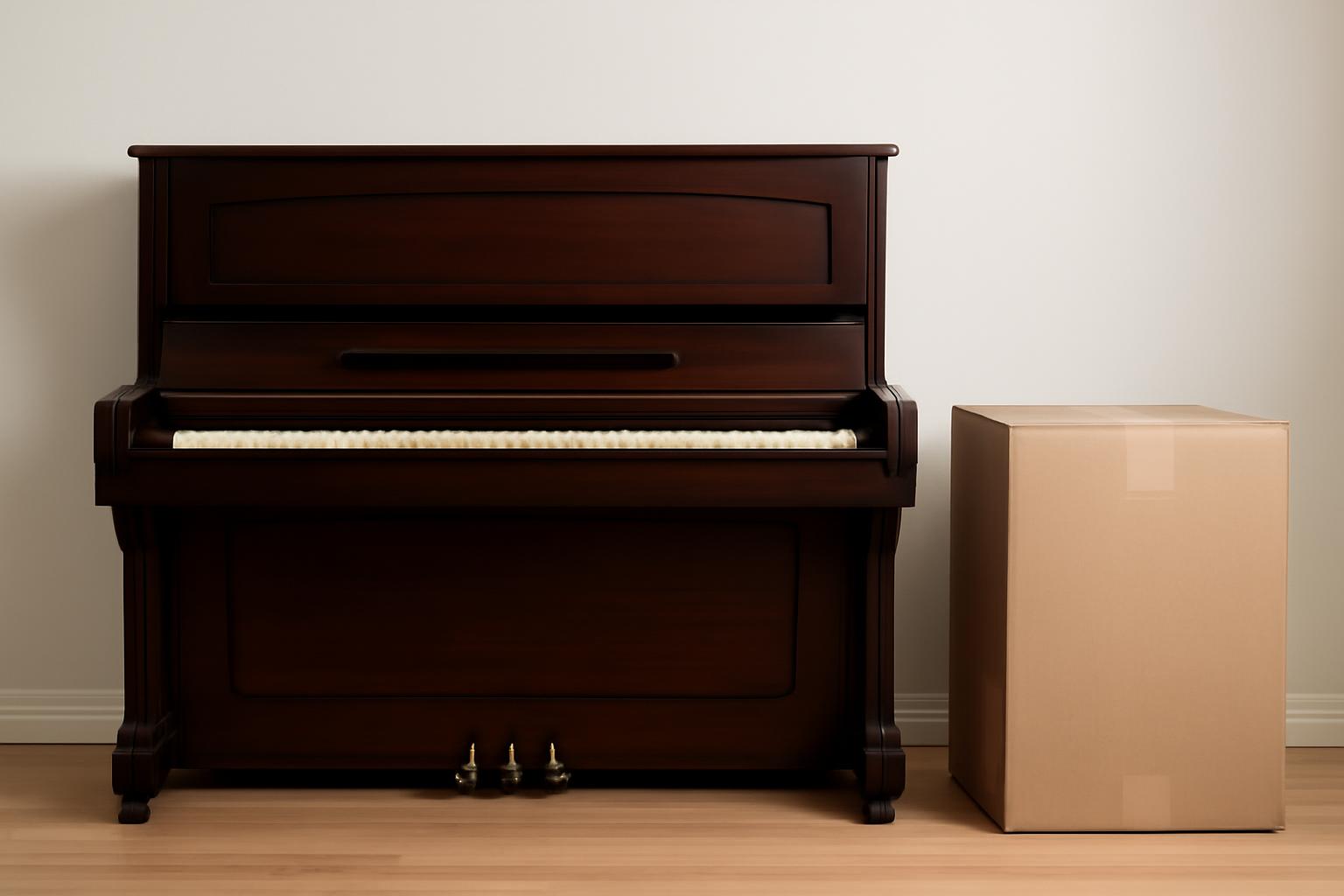
How to Donate an Unwanted Piano
Overview
To donate an unwanted piano, first assess its condition, usefulness, and approximate value; then identify likely recipients such as piano donation programs, nonprofits, schools, or churches; submit details and photos for acceptance review; coordinate pickup; and keep a donation receipt. Whether donation works depends on whether an organization judges the instrument worth accepting and moving.
Success looks like this: an organization confirms in writing that it accepts the piano, a pickup date is scheduled, the instrument leaves your property, and you receive a receipt for your records. Donation guides consistently emphasize that acceptance is conditional, not automatic — Piano Buyer recommends knowing the piano’s current condition and fair market value before deciding where to donate, and LoadUp frames the first decision as choosing between donation and recycling based on the piano’s condition. This guide walks through that decision, the outreach and pickup process modeled on real donation programs such as Pianos for Education, and responsible fallbacks if no one accepts the instrument.
Decide whether donation is realistic
Before you contact anyone, decide whether donation is a reasonable use of your time. A piano that plays well, holds a tune, and can be moved safely is a plausible donation candidate; a piano with serious structural or mechanical problems may cost a recipient more to move and repair than it is worth to them. Piano Buyer’s guidance on donating a piano stresses that nonprofits apply their own criteria and that donors should understand condition and fair market value before choosing where to donate — in other words, organizations evaluate the instrument, not just the generosity of the offer.
Weigh a few factors together rather than in isolation:
- Condition and playability — does it work as a musical instrument today, or would it need repair first?
- Approximate value — is the piano worth enough that an organization would want it, per Piano Buyer’s advice to know fair market value first?
- Urgency — do you have weeks for acceptance review and scheduling, or days before a move-out or closing?
- Safe removal — can the piano physically leave the building without specialist movers, stairs problems, or damage risk?
If most of these factors point the right way, proceed to the assessment and outreach steps below. If the piano is in poor condition and you face a hard deadline, it is usually smarter to plan a fallback — recycling, giveaway, or paid removal, all of which LoadUp treats as legitimate outcomes for an unwanted piano — in parallel with any donation attempt, so a rejection does not leave you starting from zero.
Check condition, usefulness, and value before you contact anyone
Start with an honest assessment, because it determines both whether to attempt donation and what you tell recipients. Piano Buyer recommends knowing the piano’s current condition and fair market value before deciding where to donate, and LoadUp builds its donation-or-recycling guidance around assessing the piano first.
Work through these questions and write down the answers:
- Does the piano play? Are any keys, pedals, or strings broken or unresponsive?
- When was it last tuned, and does it hold a tune reasonably well?
- Are there visible problems — water damage, pest damage, cracked wood, a wobbly frame?
- What type is it (upright, spinet, console, grand, baby grand, player, digital)? Type affects moving difficulty and recipient fit, so note it as information to provide and ask each recipient whether they accept that type.
- What is its approximate age, brand, and condition-adjusted market value? If you are unsure, a piano technician’s opinion or a written appraisal can give you a defensible answer.
Treat this as a screening exercise, not a pass/fail exam you administer yourself. The recipient makes the final acceptance call; your job is to gather accurate facts so they can decide quickly. If the assessment reveals major repair needs, do not hide them — disclosing problems up front prevents a failed pickup later. If the piano appears essentially unplayable, skip ahead to the alternatives section rather than sending outreach that is likely to be declined.
Donation is not the only good outcome
Donation is one of several responsible endings for an unwanted piano, and it is not always the best one. Piano Buyer’s article is explicitly framed around three paths — donating, converting, or recycling — for people with a piano they do not want to keep or sell, and LoadUp similarly presents donation and recycling as a first-step choice depending on condition.
If the piano still has meaningful market value, selling it may serve you better than donating it. If it is playable but low-value, a free listing to a local family, student, or musician can rehome it faster than a formal donation program. If it is not usable as an instrument, conversion into furniture or art, recycling of its materials, or professional haul-away are legitimate outcomes rather than failures. Keeping these options in view from the start protects you from sinking weeks into outreach for a piano that no organization is likely to want, especially when you are working against a moving or estate deadline.
Find the right recipient
Match the piano to organizations that plausibly need it, rather than mass-contacting every charity in town. The most direct route is a piano-focused donation program: Pianos for Education runs a structured donation process with a form-based submission, pickup coordination, and a donation receipt, and Piano Buyer describes Piano Finders’ Piano Donation Project, which helps place pianos with nonprofit organizations without charging for the placement service. Programs like these exist specifically to match donated pianos with recipients, which reduces your outreach burden.
Beyond dedicated programs, consider local organizations that use pianos in their daily work:
- Schools and music education programs
- Churches and other places of worship
- Community centers and senior centers
- Nonprofits, theaters, and arts organizations
- Music teachers, students, and working musicians in your area
For local searching, combine terms like “piano donation,” “donate a piano,” or “piano donation pickup” with your city or region, and check whether local music schools or community programs post instrument-donation pages. Two cautions keep this step efficient. First, no category on this list universally accepts pianos — each organization has its own needs, space, and acceptance criteria, so treat every contact as an inquiry, not a delivery plan. Second, prioritize organizations that can realistically handle the logistics: a recipient with no budget or plan for moving a piano may express interest and then stall. A good outcome for this step is a short list of three to six specific recipients — ideally including at least one piano-focused program — ready for the outreach process below.
Follow the donation process step by step
The donation process runs in four ordered steps: gather the piano’s details and photos, contact programs and local organizations, work through acceptance review and pickup logistics, and collect your receipt and documentation. This sequence mirrors how a real donation program is structured — Pianos for Education organizes its process around submitting your piano donation, piano pickup, and a piano donation receipt.
Each step below names what you need going in and what a successful outcome looks like before you move on. Complete the steps in order: skipping the information-gathering step is the most common cause of slow replies and failed acceptance reviews, because recipients cannot evaluate a piano they cannot see or identify. Expect the overall process to involve some waiting between steps for review and scheduling; if you are on a hard deadline, run your fallback planning in parallel from Step 2 onward.
Step 1: Gather piano details and photos
Assemble one complete information packet before any outreach. This step is grounded in how donation intake actually works: Pianos for Education asks donors to complete and submit its Donate Piano form and to use the form’s upload buttons to attach photos. If a structured program needs a form and images to review a piano, informal recipients like schools and churches will need at least as much to say yes.
Prepare the following:
- Photos — clear images of the full piano, the keyboard, and any visible damage. Photo attachments are an evidence-backed part of at least one program’s donation form.
- Identification — brand, model, and serial number if you can find them, plus piano type (upright, spinet, console, grand, player, digital).
- Condition notes — playability, tuning history, and any known problems, taken from your Step 1 assessment.
- Location and access — pickup address, floor level, stairs or elevator, doorway constraints, and parking access.
- Timing — your deadline, if any, and the days you are available for pickup.
The photos and form submission reflect a documented program requirement; the remaining items are practical preparation for questions recipients commonly ask, not universal requirements — some organizations will want less, a few may want more. The observable outcome of this step: a single folder or document containing photos and answers you can send to any recipient within minutes, without scrambling for details mid-conversation.
Step 2: Contact programs and local organizations
Send a concise, complete inquiry to each recipient on your shortlist. For piano-focused programs, follow their published process — Pianos for Education directs donors to complete the Donate Piano form on its Make a Donation page and attach photos through the form’s upload buttons, so use the program’s own intake channel rather than a generic email. For schools, churches, nonprofits, and community organizations, email or call the office and ask who handles donated instruments.
Whatever the channel, your message should let the recipient evaluate the piano without a follow-up question. A workable structure:
- One sentence offering the piano for donation and why (moving, estate, downsizing).
- The piano’s type, brand, condition summary, and tuning history.
- Photos attached or linked.
- Location, access details, and your timeline.
- A direct question: “Can your organization accept this piano, and if so, how does pickup work?”
Keep the tone factual and disclose problems honestly; an organization that discovers undisclosed damage at pickup may cancel on the spot, which wastes everyone’s time. Contact several recipients rather than one at a time, since some will decline or not reply — Piano Buyer’s discussion of nonprofit criteria makes clear that rejection is a normal part of this process, not a sign you did something wrong. The successful outcome of this step: each recipient has enough information to approve, decline, or ask a specific follow-up question, and you have a dated record of who you contacted and when.
Step 3: Review acceptance, pickup, and cost responsibilities
Once a recipient expresses interest, confirm three things in writing before you consider the piano donated: formal acceptance, the pickup plan, and who pays for what. Pianos for Education’s process treats piano pickup as its own stage after submission and review, which is a useful model — interest is not acceptance, and acceptance is not a scheduled truck.
Acceptance review means the organization examines your details and photos and decides whether the piano fits its needs. Ask directly whether the piano is accepted, conditionally accepted pending inspection, or still under review. During pickup planning, revisit the access details from your packet: stairs, elevators, narrow doorways, and long carries can change who the recipient sends and whether the pickup is feasible at all, so surface those constraints before a crew arrives.
Cost responsibility varies by organization and is not standardized, so ask rather than assume. Useful questions include: Who arranges and pays for the piano movers? If the piano needs tuning or minor repair, does the recipient handle that after pickup, or do they expect it done first? If an appraisal is needed for documentation, who obtains it? If pickup is delayed, who covers any storage? The supplied evidence does not support universal answers or typical prices for any of these, which is exactly why written confirmation matters. The observable outcome of this step: a confirmed pickup date, a named contact, and a clear written note of any costs or tasks that remain your responsibility. If a recipient cannot answer the moving-cost question, treat that as a warning sign that the pickup may quietly stall.
Step 4: Get a receipt and keep tax documentation
Request a donation receipt at or before pickup, and keep it with your records. A receipt is a standard element of a structured donation — Pianos for Education includes a “Piano Donation Receipt” stage in its published process — and it is your basic proof that the donation occurred, regardless of whether you intend to claim any tax benefit.
If you do hope to claim a deduction, a few documentation habits are worth adopting, framed here as general information rather than tax advice. Verify the recipient’s nonprofit status before donating, since deductibility generally depends on the organization’s qualification, not just its good work. Keep support for the piano’s fair market value — Piano Buyer recommends knowing condition and fair market value before donating, and the same assessment, technician opinion, or appraisal that informed your decision can support your records. Be aware that higher-value noncash donations can involve additional requirements, such as a qualified appraisal or IRS Form 8283 for reporting noncash contributions; the thresholds and rules are specific, so consult IRS guidance or a tax professional for your situation rather than relying on a general article.
The successful outcome of this step: a dated receipt naming the organization and describing the donated piano, plus your own file of photos, condition notes, and any value documentation. With that in hand, the donation is complete on your side.
Confirm the donation is on track
Verify progress at each stage rather than assuming silence means success. Pianos, unlike bags of clothing, require review, scheduling, and specialized moving, so a donation can quietly stall between “yes, we’re interested” and an actual pickup.
Use these checkpoints to confirm the donation is genuinely moving forward:
- Submission confirmed — you received an acknowledgment that your form or inquiry (with photos) was received, matching the submission stage in programs like Pianos for Education’s.
- Acceptance stated explicitly — someone told you, in writing, that the piano is accepted, not just “sounds interesting.”
- Pickup scheduled — you have a date, a time window, and a named contact for the pickup crew.
- Access plan agreed — stairs, doors, and parking constraints have been discussed, not just mentioned.
- Receipt expectation set — you know when and how you will receive the donation receipt.
If any checkpoint stays unresolved after a reasonable follow-up — the evidence does not support quoting universal timelines, so calibrate to your own deadline — send one polite nudge, then move to your next recipient or a fallback option. A donation that cannot produce a pickup date is not yet a donation, and treating it as done can leave you with a piano in the house the week of your move.
Troubleshooting: what to do when donation stalls
Most stalled donations trace back to one of four problems: rejection, silence, unresolved logistics, or a deadline the process cannot meet. Each has a workable response.
The piano was rejected. Rejection usually reflects the recipient’s criteria, not rudeness — Piano Buyer’s coverage of donating a piano explains that nonprofits weigh whether an instrument is worth accepting, which is why condition and fair market value matter before outreach. Ask briefly why it was declined. If the reason is specific and fixable in principle — for example, the piano needs tuning or minor repair — ask whether the organization would accept it in that state at their expense, or reconsider whether investing in repair yourself makes sense given the piano’s value. If the reason is fundamental condition problems (issues like water damage, structural weakness, or non-working action are worth investigating on your own instrument), further donation outreach is unlikely to succeed; move to alternatives.
No one replies. Send one follow-up per recipient, then widen your list to additional programs and local organizations rather than waiting indefinitely. A piano-placement program like the one Piano Buyer describes at Piano Finders can be a stronger bet than cold-contacting individual charities, because matching donated pianos to nonprofits is its stated purpose.
Pickup responsibility is unclear. If an interested recipient cannot say who will move the piano, put the question in writing and set a decision date. An acceptance without a moving plan tends to expire quietly.
You have a hard deadline. Estate clearances, closings, and move-outs often cannot wait for donation review cycles. Run donation outreach and a fallback plan in parallel from day one, and set a calendar date on which you stop pursuing donation and execute the fallback. That switch date is the single most useful decision a deadline-bound donor can make.
What to do if no one accepts the piano
If donation fails, you still have several responsible paths, and choosing one promptly beats letting the piano sit. Both Piano Buyer and LoadUp treat donation as one option among several for an unwanted piano rather than the only legitimate ending.
Work down this ladder, roughly from highest to lowest reuse of the instrument:
- Free listing or giveaway — offer the piano at no cost to local families, students, teachers, or musicians. A playable piano that no organization wants may still delight an individual, and the taker often handles the move.
- Resale — if your value assessment suggested real market worth, selling may have been the better path all along; a rejection from charities does not mean the piano is worthless to buyers.
- Repair sponsorship — if a recipient wanted the piano but for a specific fixable issue, weigh whether funding that repair is realistic given the piano’s value. Often it is not, and that is a legitimate answer.
- Conversion or repurposing — Piano Buyer’s article covers converting a piano as an alternative to donation, such as turning it into furniture or art, which keeps materials in use even when the instrument’s playing life is over.
- Recycling — LoadUp frames recycling as the standard counterpart to donation for pianos in poor condition. Availability and what can actually be recycled vary by location, so contact local recycling or waste services to confirm what they accept before you count on this route.
- Paid removal — junk-removal and piano-hauling services can take the piano quickly, which matters most for estate and move-out deadlines. Costs vary by provider and situation, so get quotes rather than relying on general figures.
Whichever path you choose, apply the same discipline as the donation process: confirm the plan in writing, verify the pickup or drop-off actually happens, and keep a simple record. The goal from the start was to remove the piano responsibly — donation is the preferred route, but any of these endings completes the job.