
How to Clean Rust From a Metal Locker Without Stripping Good Paint
Clean small rust spots on a painted steel locker, prepare exposed metal and touch up the finish. Know when to ask facility staff for repair instead.
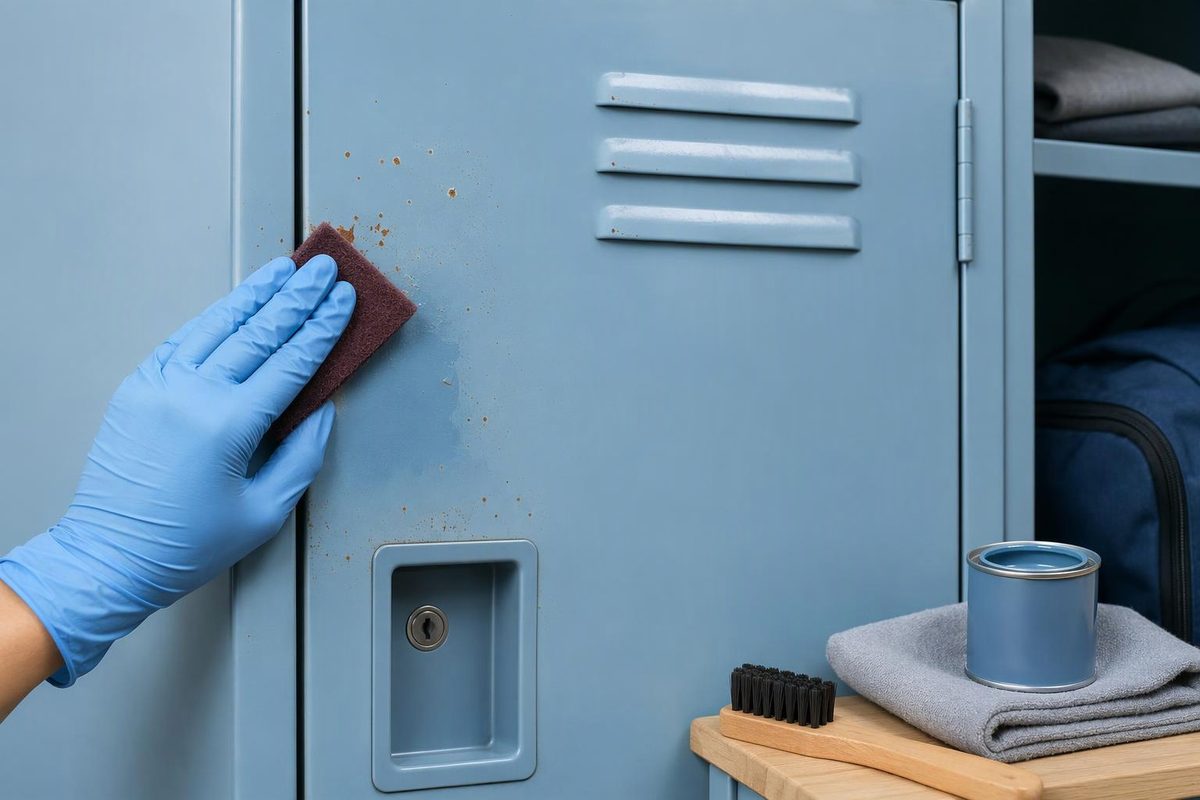
For a small rust spot on a painted steel locker, clean and dry the surface, remove the rust locally with fine emery cloth, then protect the exposed metal with compatible touch-up paint and primer where required. Locker manufacturer Lyon specifically recommends fine emery cloth for rust removal and touch-up paint for nicks and scratches. Lyon locker maintenance instructions
If the locker belongs to a storage facility, school or workplace, photograph the damage and ask staff before sanding or painting. A renter’s first step should be reporting the condition, not altering someone else’s equipment. Ask whether any repair work is permitted on site.
Check whether this is a cleaning job
The method below suits isolated rust spots on otherwise solid, painted steel. Don’t apply it automatically to stainless steel, galvanized metal or an unknown finish; identify the material and check its care instructions first.
Ask for repair or replacement assessment rather than cosmetic touch-up if you see holes, substantial flaking, a weakened shelf or corrosion around hinges and the latch. Likewise, don’t try to fix a door that no longer closes securely by simply painting over the damage.
For a vintage locker with an unknown paint history, pause before scraping or sanding. Older painted furniture can contain lead, and refinishing can release lead dust. Have the coating assessed; do not scrape or sand paint containing lead. Salt Lake County lead-safety guidance
Remove a small rust spot step by step
Gather mild soap, water, soft cloths or a sponge, fine emery cloth, a small brush, and the locker manufacturer’s recommended touch-up coating. If that coating requires primer, choose one compatible with both the steel and the finish paint. Wear eye protection and suitable gloves, and follow coating-label ventilation and protective-equipment requirements. Don’t apply coatings or chemical removers inside a closed locker or an inadequately ventilated storage unit.
1. Empty and clean the locker
Remove belongings and protect the surrounding floor. Wipe the interior and exterior with a damp cloth or sponge and a mild soap solution. Remove soap residue with a clean, damp cloth, then dry thoroughly, including corners and seams.
Don’t flood the locker or reach first for a harsh cleaner. Lyon warns that caustic cleaners and disinfectants can damage its locker finish and void its warranty. Lyon cleaning guidance
2. Work only on the damaged area
Gently rub the rust with fine emery cloth. Remove rust and loose coating while preserving firmly attached surrounding paint. Smooth the edge of the damaged paint into the intact finish—a process called feathering—so the repair does not leave an abrupt ridge. Lyon touch-up guidance
For a small spot, start by hand rather than using a power grinder. If corrosion extends beneath a much larger area of paint, or you cannot clear it without substantial stripping, stop and reassess the repair.
3. Remove residue and let the surface dry
Clean away sanding residue using the preparation method specified by your chosen coating. The surface must be clean and fully dry before priming. Previously painted areas must also be sound; smooth or glossy paint may need light sanding for adhesion. Test coating compatibility on an inconspicuous patch before committing to a visible repair. Rust-Oleum primer preparation instructions
4. Protect the exposed steel
Apply the recommended primer where required, then the compatible touch-up paint, following the labels for coverage, application conditions and recoating times. Don’t assume that a surface dry to the touch is ready for another coat or contact with stored items.
Keep paint out of lock openings and moving latch parts. Leave the locker empty until the coating is ready for use under its instructions.
Should you use a chemical rust remover?
For an isolated spot, fine emery cloth is the simpler starting point. If you choose a rust-dissolving product, confirm that it suits the metal and surrounding finish, test it first, and follow its exact rinsing and drying instructions. For example, Rust-Oleum’s Rust Dissolver Gel contains phosphoric acid, requires adequate ventilation and must not dry on painted surfaces. It is not a general-purpose locker cleaner. Rust Dissolver Gel instructions
A rust converter is different from a remover: it changes remaining rust into a paintable surface. It still requires removal of loose rust and deteriorated paint. Rust-Oleum’s Stops Rust Rust Reformer, for example, turns black and is not for galvanized steel or non-rusted surfaces. Rust Reformer instructions
Before putting belongings back
Check that the locker and its seams are dry, and keep wet belongings out. Touch up future scratches before they become larger maintenance jobs. If rust returns in the same corner, especially alongside visible dampness, ask facility staff to investigate the moisture source rather than repeatedly cleaning and repainting it.